
Trains and depots
Your journey experience
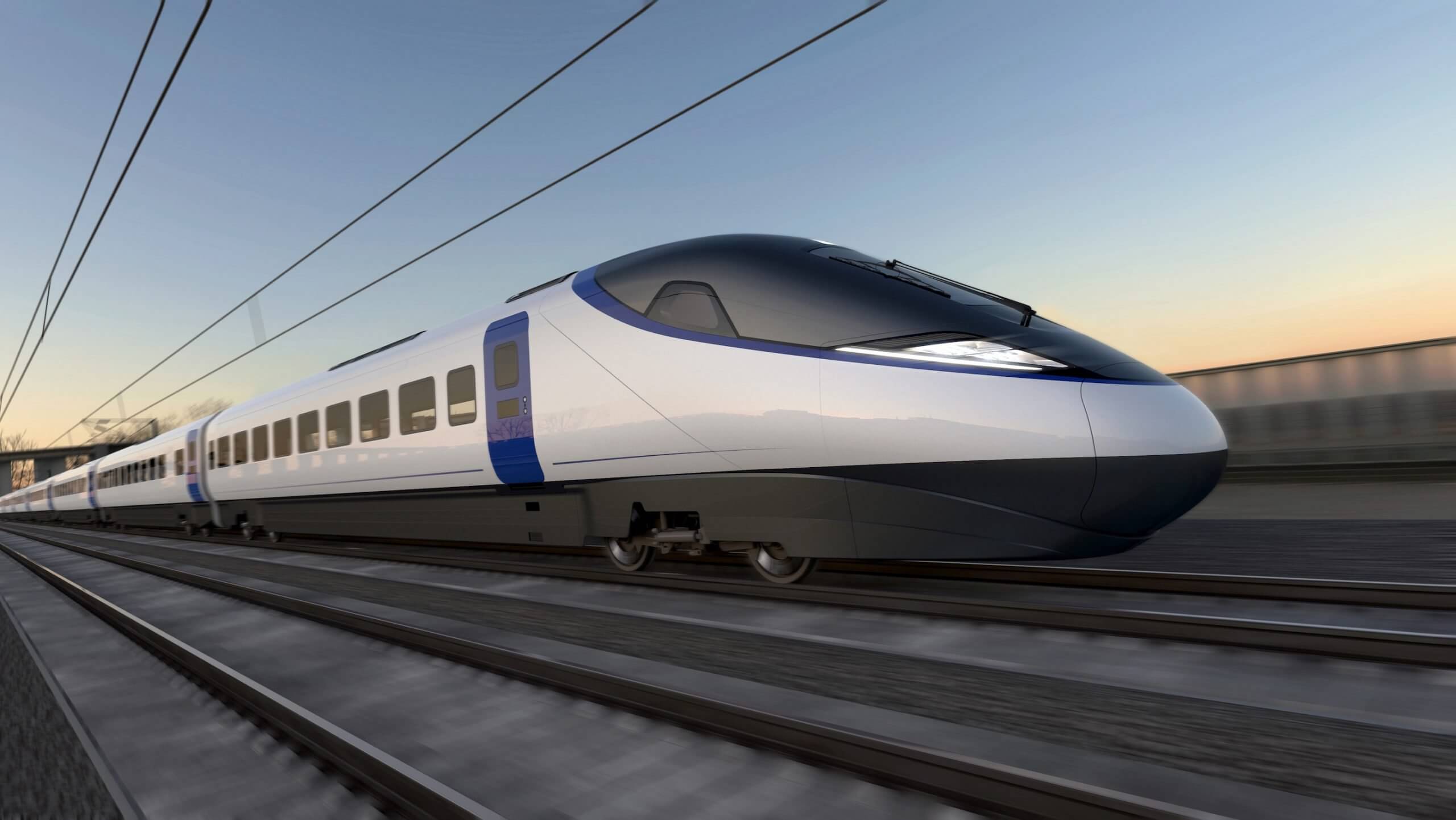
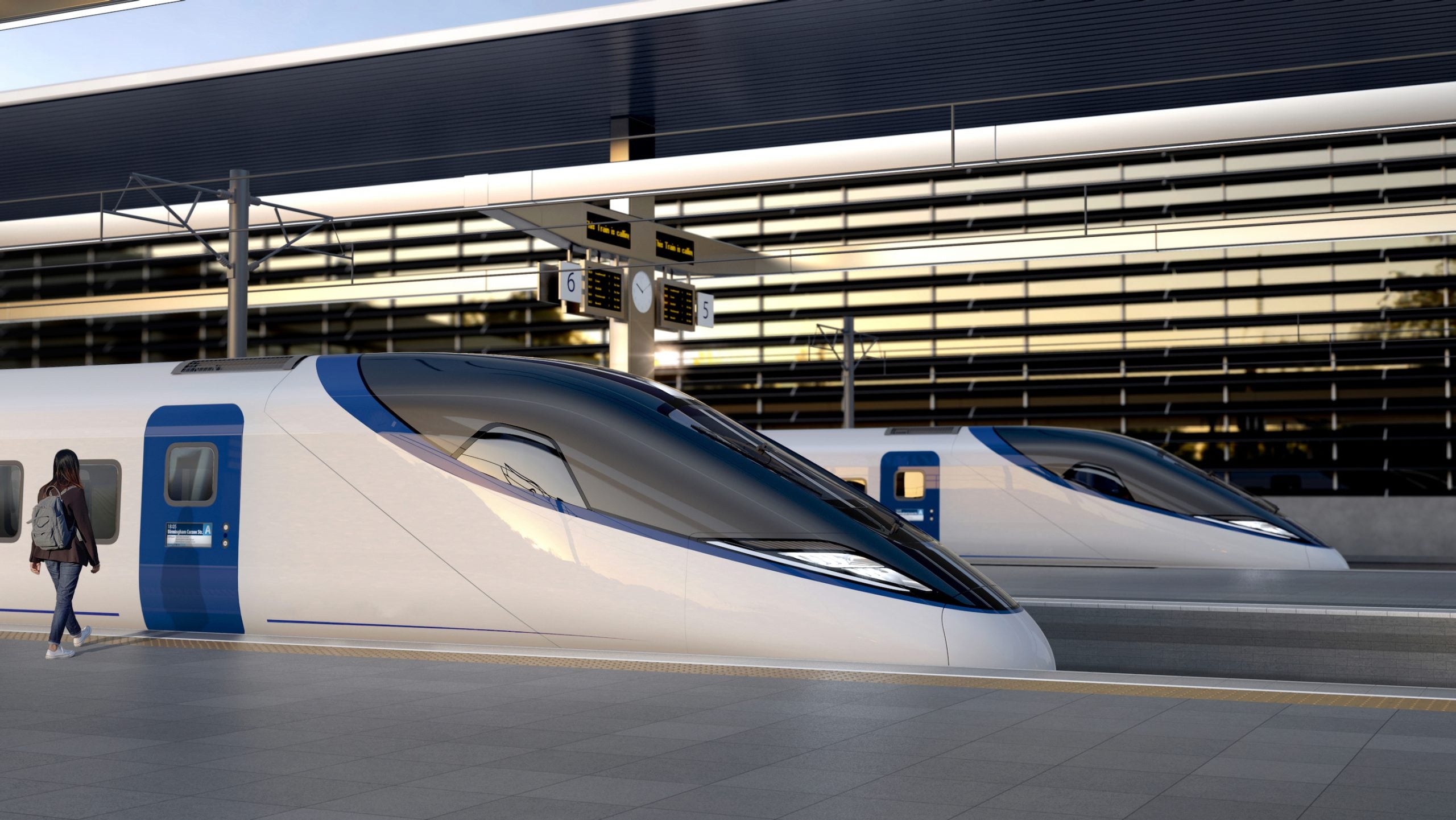
HS2’s British-built trains lay the foundations for the future of our railways. They will provide more reliable and faster journeys while relieving pressure on the congested southern end of the West Coast Main Line.
In May 2026, the government announced that HS2 will take longer to deliver and cost more than previously set out. We are proposing a package of changes to simplify the railway – increasing the likelihood of opening as early as possible and at the lowest reasonable cost. These changes include marginally reducing the maximum operating speed from 360km/h to 320km/h.
This would bring HS2 into line with the maximum operating speed of trains elsewhere in Europe and allow the trains to be tested on existing lines while HS2’s infrastructure is completed. It also avoids many of the risks associated with certifying a railway at a speed not operated anywhere in the world.
Journey times are barely altered at 320km/h compared with 360km/h, adding only three minutes – 45 versus 42 minutes – on the journey between Old Oak Common and Birmingham Curzon Street.
Where you can go
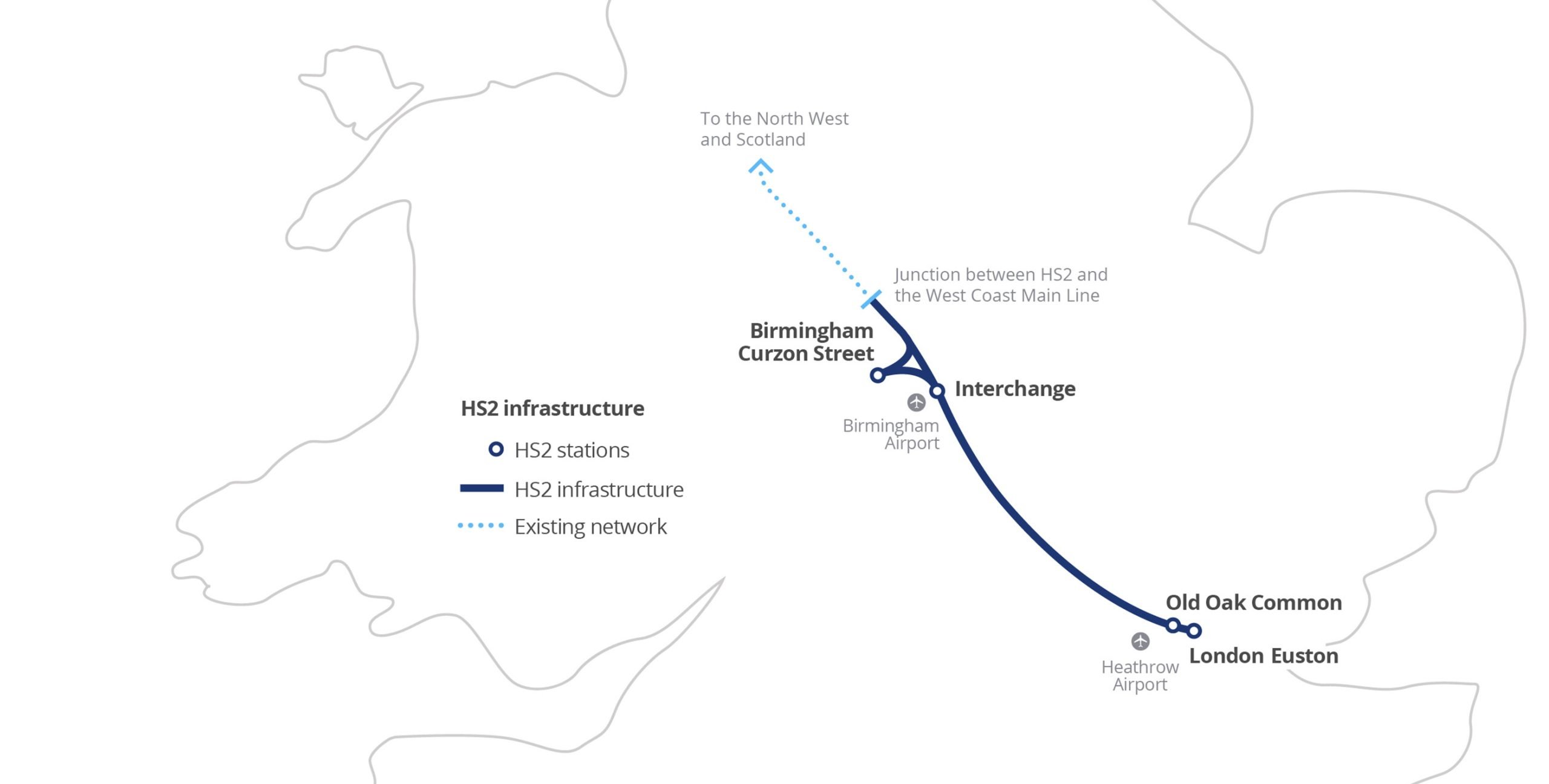
The trains will run on the new high-speed line between London and Birmingham, cutting journey times and improving capacity along the West Coast Main Line.
North of Birmingham, the trains will switch to existing rail lines, taking passengers to Manchester, Liverpool, other stations in the North West and Scotland.
Built for everyone
We’re building our fleet of trains so everyone can easily use them. They’ll have step-free boarding at HS2 stations, better-positioned grab rails, and improved wheelchair spaces based on feedback from disabled passengers.
Families will find spaces for pushchairs and child-friendly features, and there’ll be improved storage for bikes. Over two and a half years, people have helped us test and improve the design, including people with reduced mobility, cyclists, and families with young children.
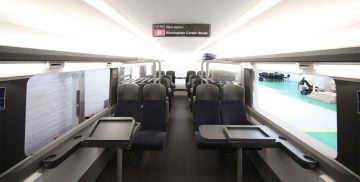
Passengers will have more leg room than on any other standard class UK train, with storage space for luggage both overhead and under seats. Every seat has USB-C charging and a fold-down table.
The trains use LED lighting that adjusts throughout the day to create a better atmosphere for long journeys.
We’re working with passengers to finalise the seat design, so everyone is comfortable on long journeys.

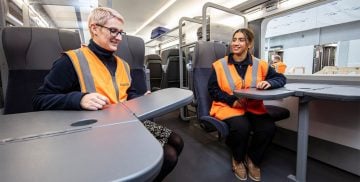
Slide 1 of 3: Inside a life-sized wooden mock-up of an HS2 train carriage.

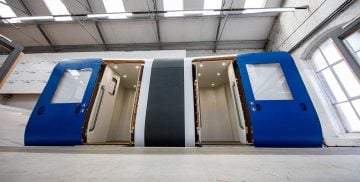
Slide 2 of 3: Platform view of a life-sized wooden mock-up of an HS2 train.

Slide 3 of 3: Interior view of a life-sized wooden mock-up of an HS2 train carriage.
Better for the environment
The fully electric trains produce no direct emissions and will be energy efficient and quiet. When they slow down, they’ll capture energy that would otherwise be wasted. The trains will also have improved aerodynamics to save energy.
We’re building them using recycled materials where possible, and they’re designed to be recyclable when they’re no longer needed.
Train design explained
Work in your area
Subscribe to our regular updates about the project, including notifications of our upcoming works, how it’s being constructed and what we’re doing to make it less disruptive.