A climate-resilient railway
Built for a changing climate
We’re building climate resilience into HS2 at every stage of design and construction. We’ve also thought carefully about how climate change and the railway could affect communities, businesses, and the natural and built environment along the route.
Climate change report
Our latest report sets out our progress so far, including how we factor climate change into planning, design and construction.
How we're building resilience
Floor risk and drainage
We’re reducing flood risk by using drainage systems that do not increase flooding elsewhere. This includes our green tunnels, which use a cut-and-cover technique. We dig a trench, build the tunnel structure, then cover it with soil and plants. These plants act as a natural drainage system.
We’re also building ditches, culverts and other drainage structures, including slabs. Slabs drain water quickly, prevent erosion and keep the ground stable. The HS2 line is designed to withstand a one in 1,000-year rain event.
Heat and cold
Hot weather can make overhead power lines expand and sag. It can also buckle rails and make the ground beneath the railway unstable. This can force trains to slow down or stop, causing disruption for passengers.
Our tracks have rail expansion devices that manage how rails expand and contract as temperatures change. These devices, along with our drainage systems, keep trains moving in cold weather, snow and ice.
Points are the moveable sections of track that allow trains to switch between lines. They can freeze in cold weather. All HS2 points have a heating system that switches on automatically when temperatures fall below a set level, keeping them working and helping trains run on time.
Station temperatures
Old Oak Common station has exposed surfaces that could absorb heat from the sun through roof-lights and unshaded areas. We’ve designed the station to reduce the risk of indoor temperatures rising too high.
Our climate change adaptation and resilience strategy for stations forms part of our work on BREEAM, a sustainability standard for new and refurbished buildings.
Wind
Overhead power lines brought down in strong winds can cause major disruption to rail services. To reduce this risk, we’re using an updated version of the overhead line system developed for the Lyon to Marseille high-speed line.
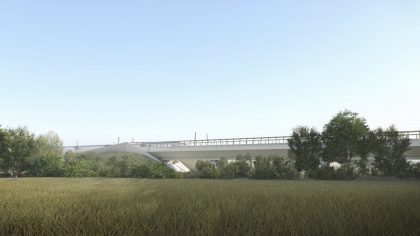
On sections exposed to stronger winds, such as viaducts, we place masts carrying the overhead electric wires closer together. This shares the load between more masts and reduces the weight each one carries. Distances between masts on HS2 range from 45 metres to 72 metres.
Landslips
Landslips can cause serious disruption. Earth can spill on to tracks from above, or crumble away beneath the line. This often happens on the existing railway after long periods of heavy rain, when the ground becomes saturated.
We’re building HS2 with shallower cuttings and embankment slopes than those on the Victorian-era railway. This improves stability. We’re also planting vegetation carefully and using soils that do not absorb large amounts of water. Extensive drainage keeps the ground stable beneath the railway.
Leaves
Thousands of tonnes of leaves fall on to railway lines each autumn. When trains crush them, they create a slippery layer on the rail, similar to black ice on roads. This makes it harder for trains to brake or accelerate.
We will not plant the types of trees that cause this problem. We’ll also plant trees well away from the line, to stop them being blown on to tracks in strong winds.
How and why we're building HS2


HS2 works near you
Sign up for updates about construction in your area. We’ll tell you what we’re building, when we’re working and what we’re doing to reduce disruption.