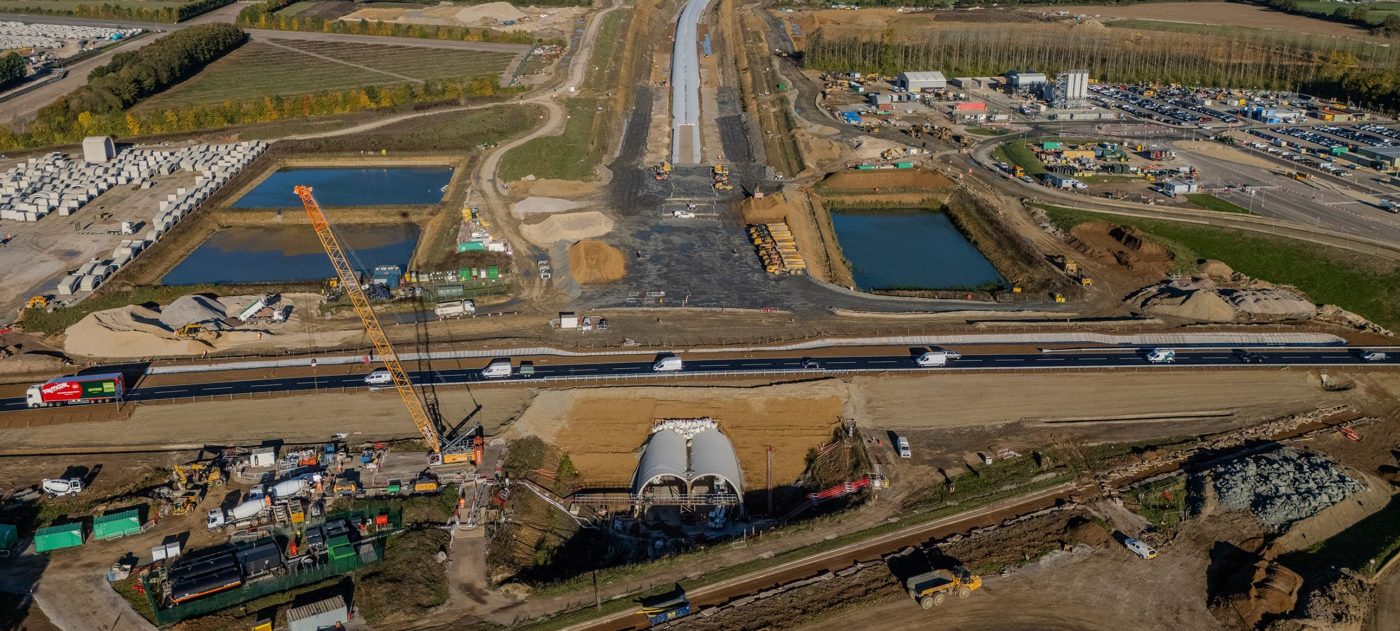
Chipping Warden tunnel
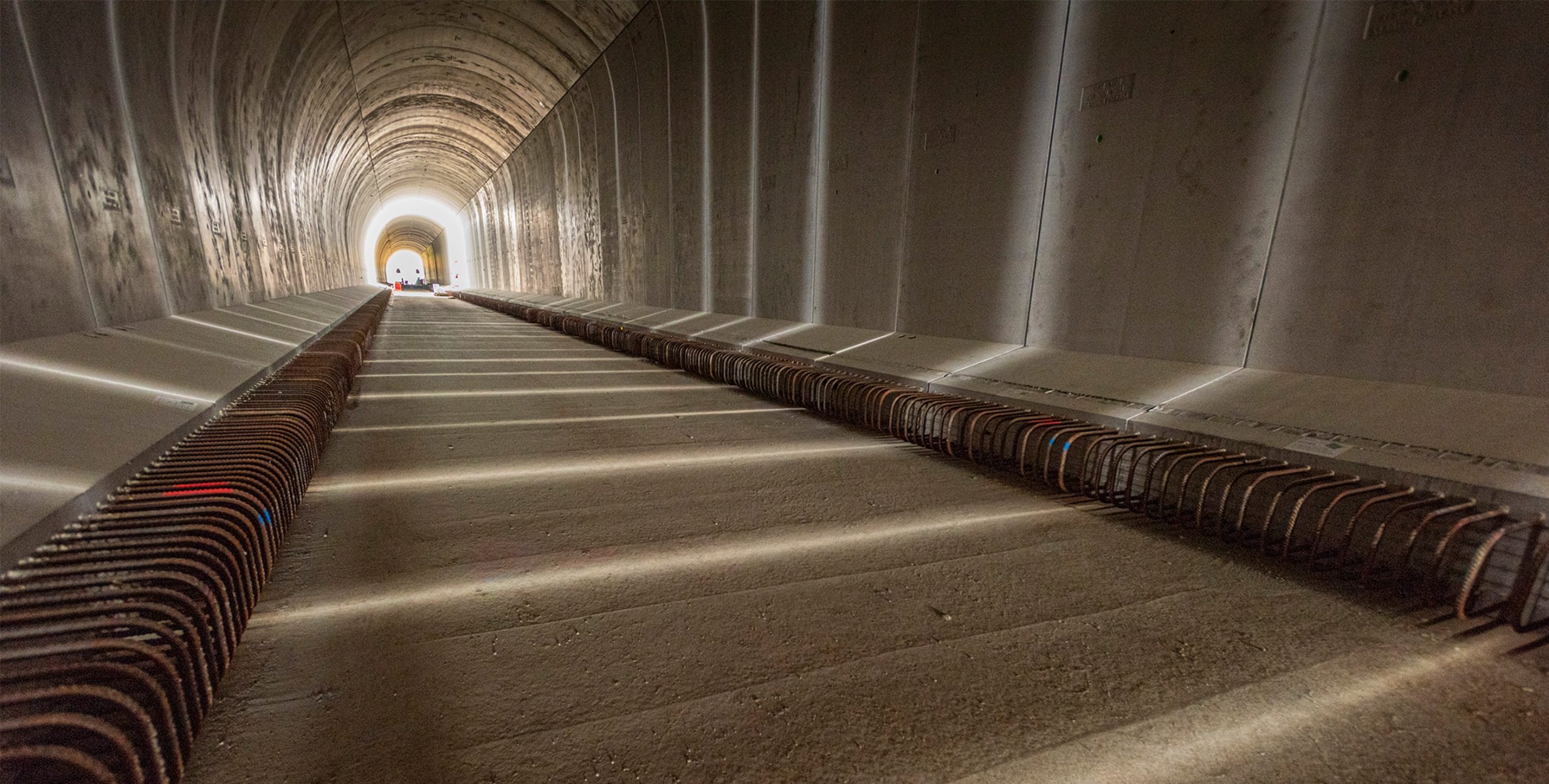
Passing through Northamptonshire
Chipping Warden green tunnel will stretch for 1.5 miles (2.5km) through Northamptonshire.
As one of five cut-and-cover, or green tunnels, on the route, it is built on the surface before being buried. Trees, plants, and shrubs are planted on top to blend into the landscape. Materials from the excavation are kept on site and then reused on the tunnel surroundings, reducing movement of spoil.
Tunnel construction
The ‘cut-and-cover’ tunnel is being built inside a cutting, with the earth put back on top afterwards, helping to blend the railway into the landscape and cut noise and disturbance for people living nearby. The shallow ‘green tunnel’ will also take HS2 trains under the realigned A361.
The construction of the tunnel is happening in stages, with the cutting first being excavated and then a layer of ‘blinding’ laid to form a concrete base for the structure.
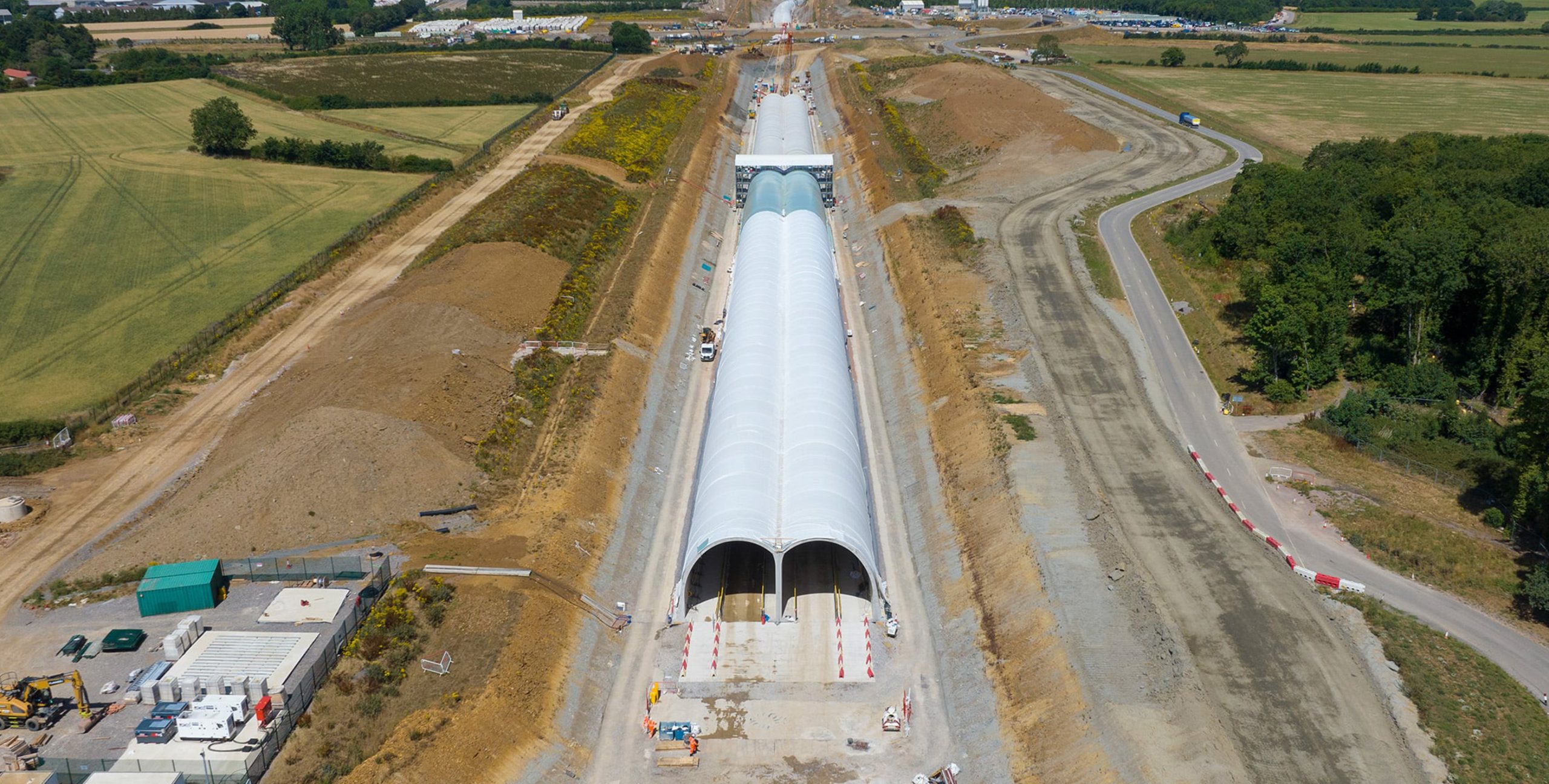
M-shaped double arch
Designed as an m-shaped double arch, the tunnel will have separate tunnels for southbound and northbound trains – each one the height of two double-decker buses. Instead of casting the whole tunnel on site, five different concrete precast segments are slotted together to achieve the double arch – one central pier, two side walls and two roof slabs. All 5,020 segments are steel reinforced, with the largest weighing up to 43 tonnes.
Similar green tunnels are being built at nearby Chipping Warden, as well as Wendover in Buckinghamshire and Burton Green in Warwickshire, stretching for a combined total of more than four miles. The tunnels will all have porous portals at either end to reduce the noise of trains as they enter and exit the tunnel. There are also small portal buildings that contain safety and electrical equipment.
Landscaping design plans
Landscaping designs include thousands of native trees and shrubs typical to the local area – including silver birch, oak, beech and willow – planted to create new woodland areas around the portals and recreate the hedgerows and field boundaries on top of the tunnel.
Email newsletters
Subscribe to our Project Update newsletter to receive the latest news and updates about HS2.