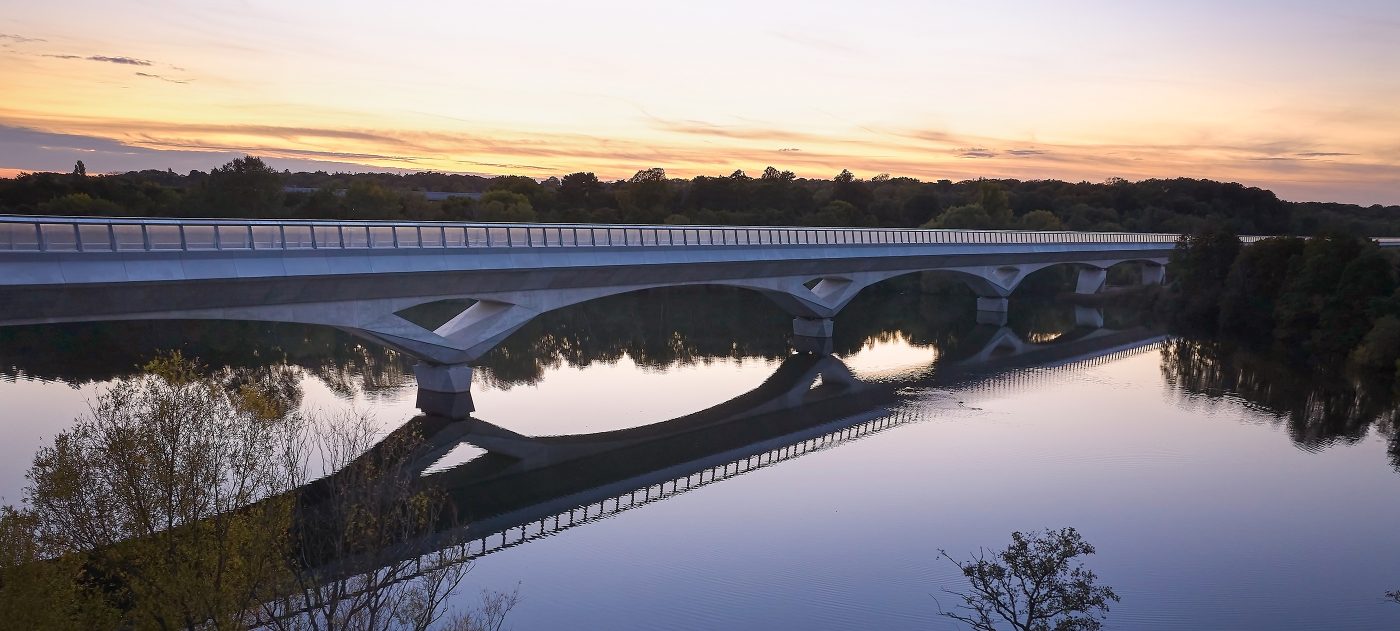
Colne Valley viaduct
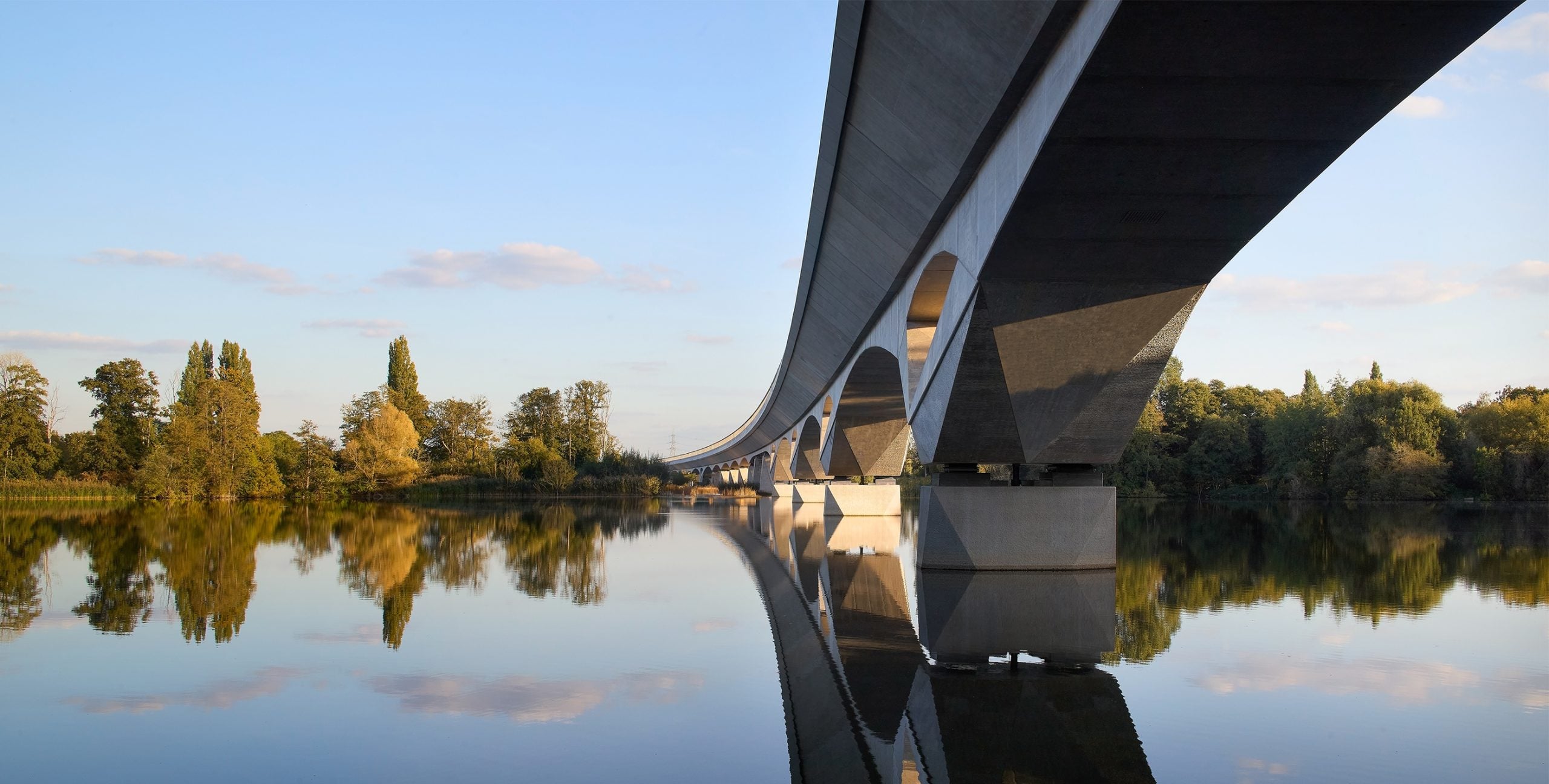
UK's longest railway bridge
The Colne Valley viaduct is the longest railway bridge in the UK and one of the most significant structures on the HS2 route. Stretching 2.1 miles (3.4 km), it carries the railway across the Colne Valley Regional Park, connecting London and the Midlands while carefully navigating one of the country’s most environmentally sensitive landscapes.
Key facts
- Length: 2.1 miles (3.4km)
- Height: about 10 metres above ground and water
- Number of piers: 56
- Construction approach: on-site manufacture, with deck segments produced at a purpose-built precast factory
Project team
- Client: HS2 Ltd
- Main works contractor: Align JV (Bouygues Travaux Publics, VolkerFitzpatrick, Sir Robert McAlpine)
- Architect: Grimshaw
- Engineer: Rendel-Ingerop, Jacobs
- Landscape architect: LDA Design
- Specimen design team: Knight Architects, EDP (Atkins Jacobs Sener)
Designed for its landscape
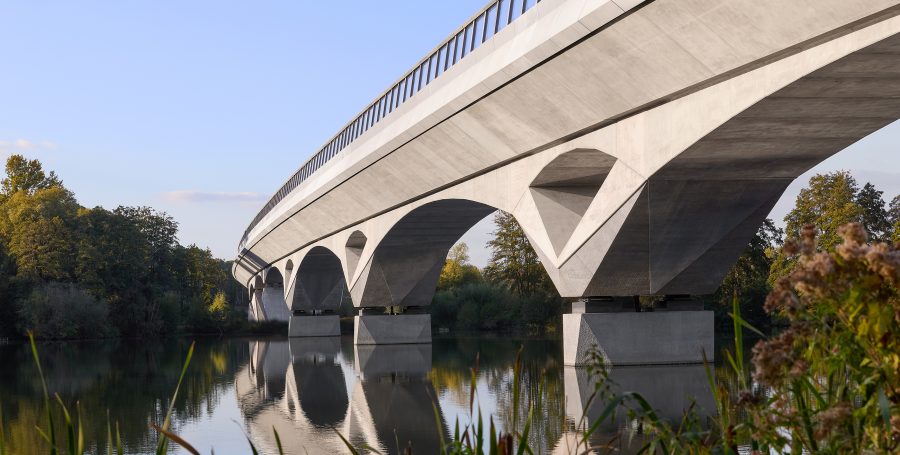
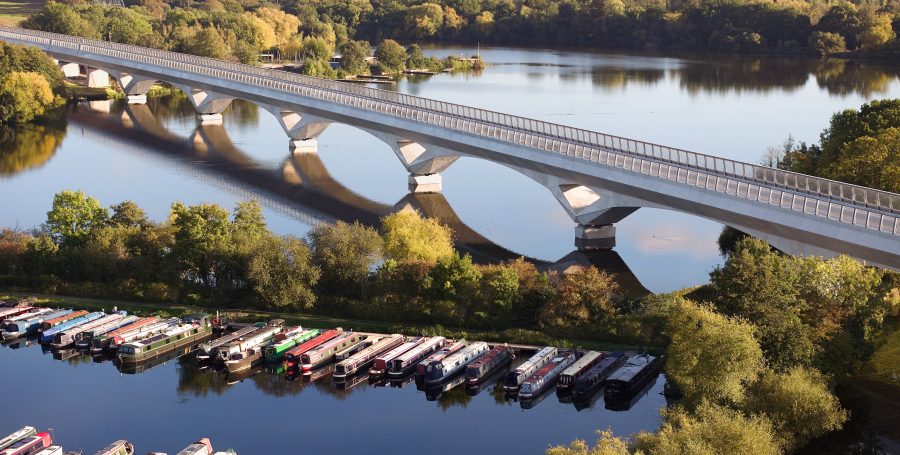
The design of the Colne Valley viaduct was inspired by the flight of a stone skipping across water. A series of elegant spans — some up to 80 metres long — carry the railway about 10 metres above the lakes, the River Colne and the Grand Union Canal.
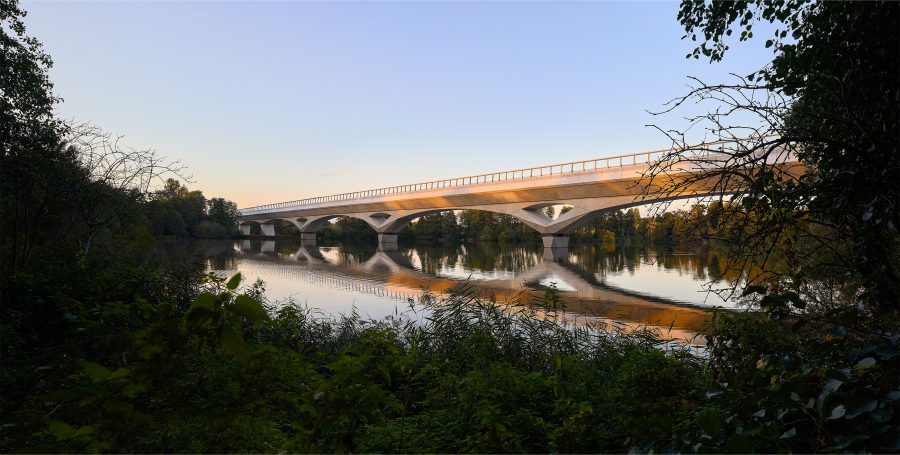
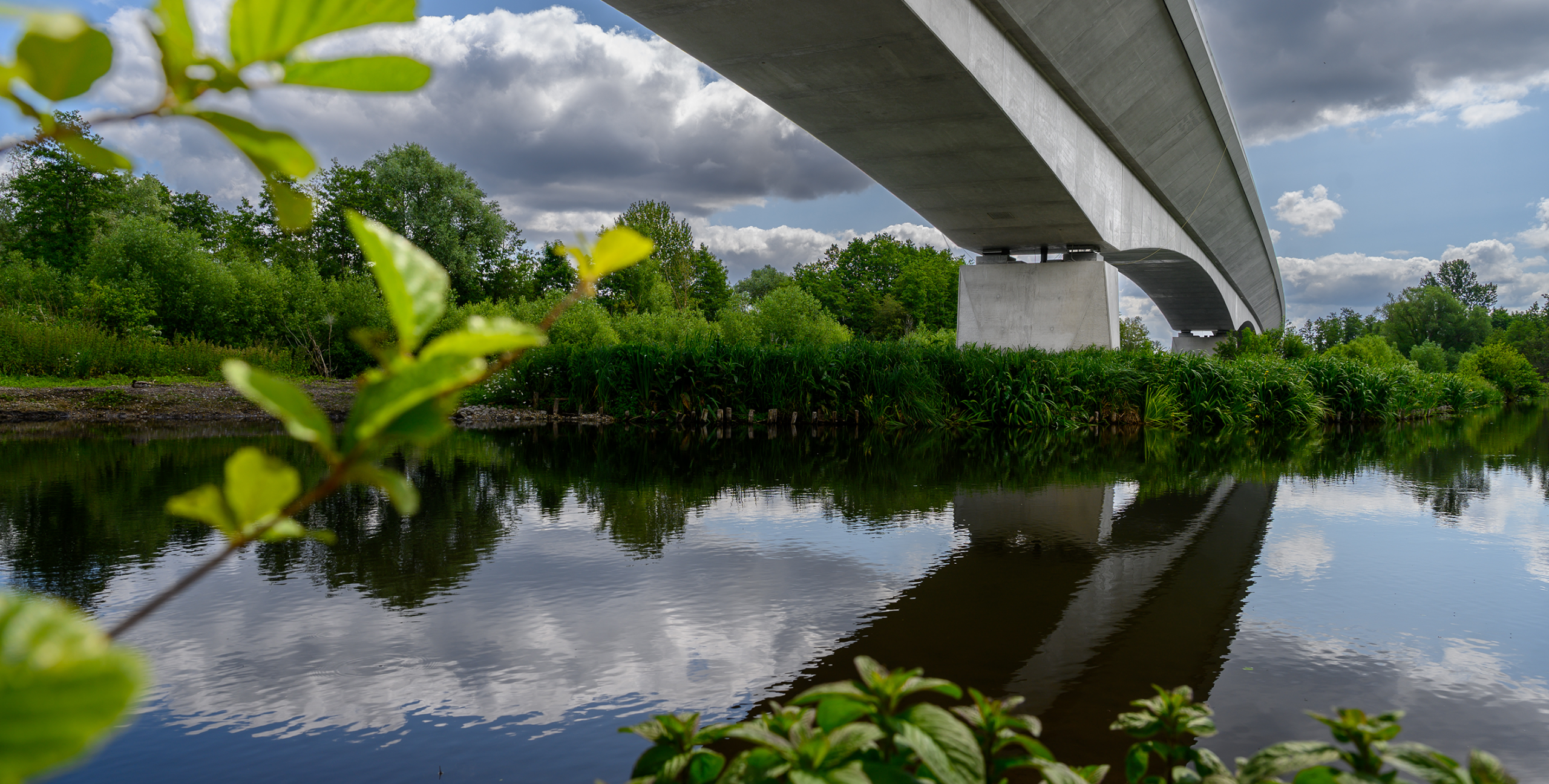
Set low within the landscape, the viaduct features wider spans across the lakes and narrower spans along its approaches. This approach minimises the number of piers within the water, reduces the overall footprint on the lakes and preserves views across the valley.
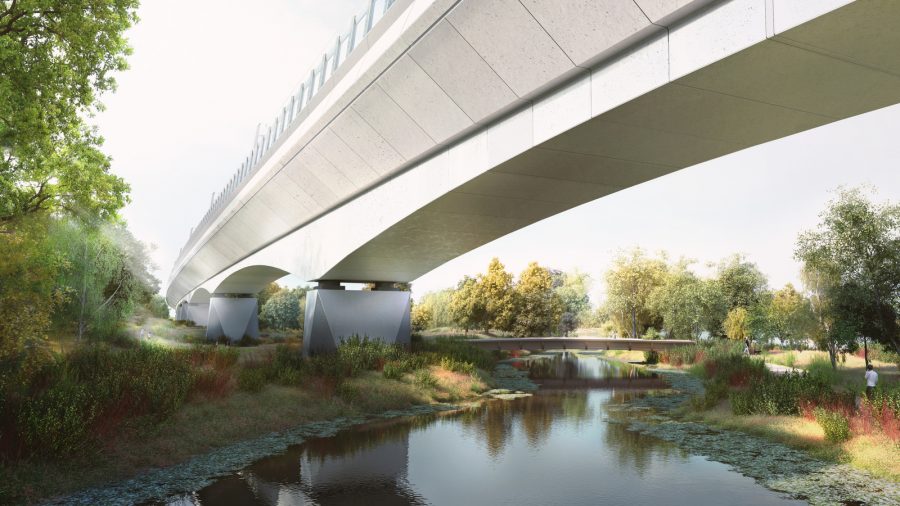
Its low-profile form reflects the natural contours of the landscape, with piers carefully positioned to limit impact on waterways, wildlife habitats and surrounding green space. Extensive ecological surveys and consultation helped shape the final design, ensuring the structure integrates as seamlessly as possible into its setting.

Engineering excellece
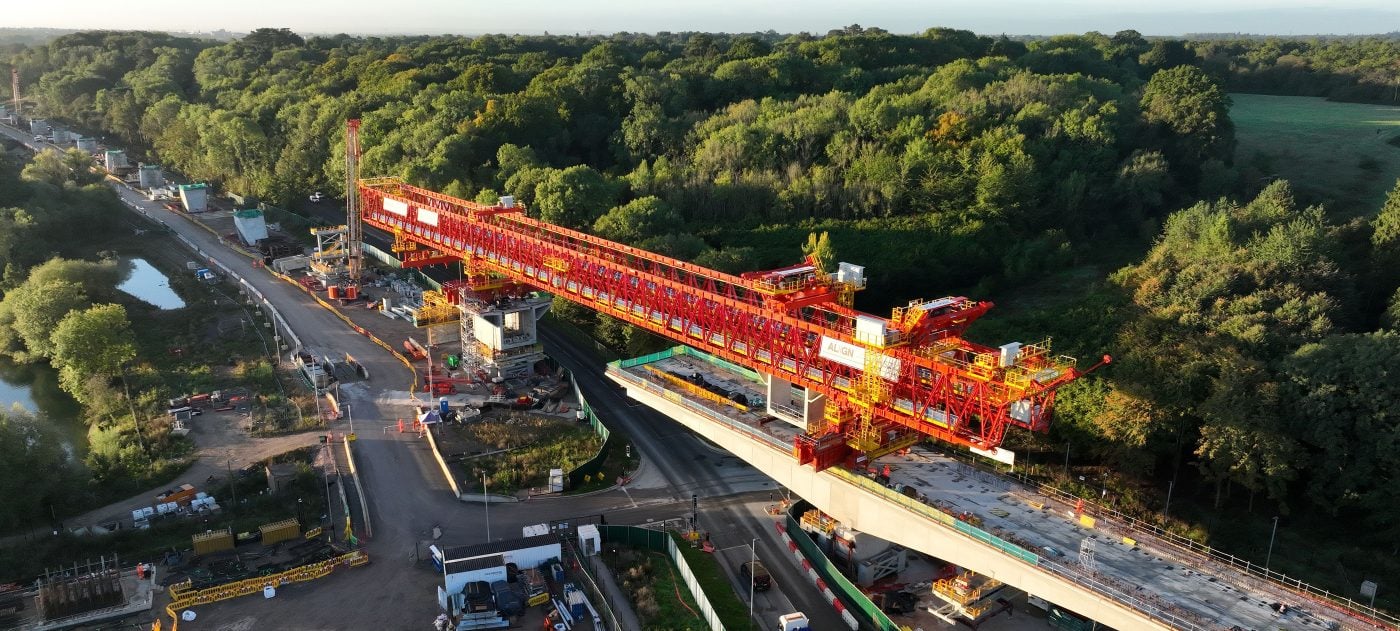
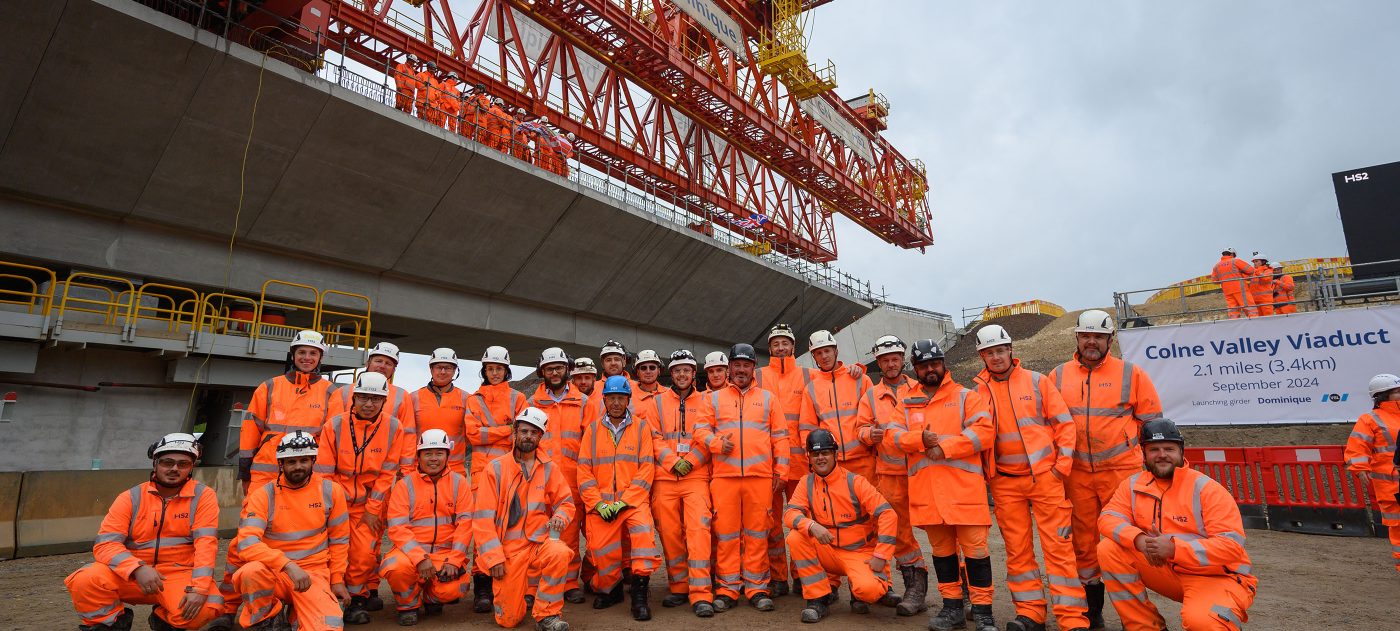
Construction of the viaduct deck began in May 2022. Over the following 28 months, a specialist team of engineers used a purpose-built launching gantry — one of the largest bridge-building machines in Europe — to install more than 1,000 precast concrete deck segments.
The segments were manufactured on site at a dedicated precast factory. Each segment is uniquely shaped to allow the structure to curve gently as its 54 spans cross the valley, maintaining the precise alignment required for high-speed rail.
Installing the segments from above reduced the need for ground-based access, helping to minimise disruption to the surrounding environment while maintaining high standards of safety, quality and efficiency.
The main civil engineering phase completed at the end of 2025, ready for work to begin to install the railway systems. The precast factory and temporary construction areas is now being removed, and the land between the viaduct and HS2’s 10-mile Chiltern tunnel will be transformed into chalk grassland and woodland as part of the HS2 green corridor project.
When operational, the viaduct will carry trains travelling at speeds of up to 200mph, supporting faster and more reliable journeys between major UK cities.
Protecting the environment
The Colne Valley Regional Park supports a rich variety of habitats and species. Protecting and enhancing this environment has been a priority throughout construction.
Measures include habitat creation, careful water quality management, noise mitigation and ongoing ecological monitoring. The project will also deliver long-term environmental improvements, including new areas of woodland and grassland, enhanced biodiversity and improved public access within the park.
A landmark structure
More than a piece of infrastructure, the Colne Valley viaduct is a landmark of modern British engineering. It reflects close collaboration between designers, engineers and environmental specialists to deliver a structure that is both technically ambitious and sensitive to its surroundings.
As HS2 progresses, the viaduct stands as a visible symbol of the scale, complexity and innovation involved in building Britain’s new high-speed railway.

Email newsletters
Subscribe to our Project Update newsletter to receive the latest news and updates about HS2.