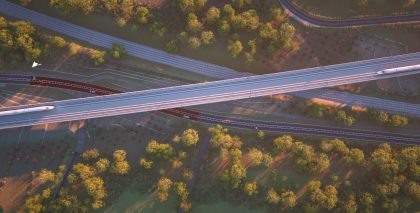
Double composite viaducts
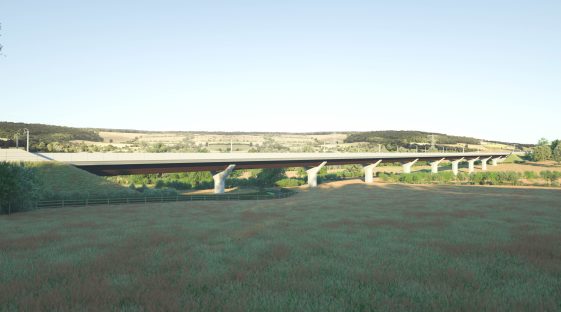
Efficient design for complex crossings
Several viaducts on the HS2 route use a double composite steel–concrete design. This improves structural efficiency and reduces carbon emissions. The approach draws on experience from European high-speed rail networks.
What is a double composite viaduct?
A double composite viaduct refers to how the structure works internally, not how many structures sit side by side.
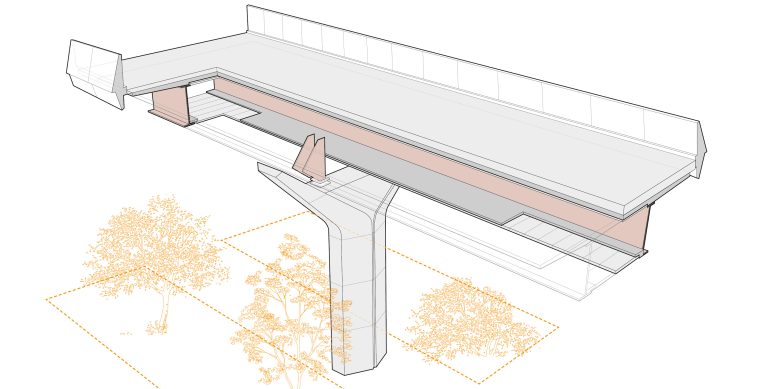
In a conventional single composite steel bridge, a steel box girder carries the structural load with a reinforced concrete slab on top to form the deck. The steel and concrete act together structurally.
In a double composite design, reinforced concrete is placed both above and below the steel box girder. This allows the materials to work together in different parts of the structure to resist bending forces.
The lower concrete layer is particularly effective over the piers, where forces reverse direction. This improves structural efficiency and allows engineers to use less steel, increase span lengths and improve stiffness for high-speed rail loading.
Construction in practice
Construction techniques vary by location but typically involve:
- Installing deep piled foundations and reinforced concrete piers
- Fabricating steel girders off-site
- Launching or lifting steel deck sections into place
- Casting the upper and lower reinforced concrete elements
- Installing track systems and railway equipment
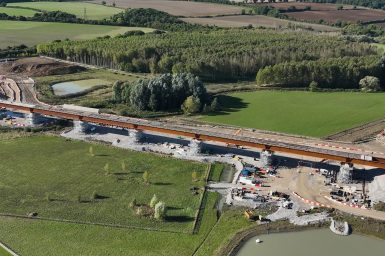
At the viaducts near Brackley, engineers have used incremental launching, pushing large sections of deck into position across the landscape. This reduces disruption to roads, railways and environmentally sensitive areas below.
Where we’re using double composite design
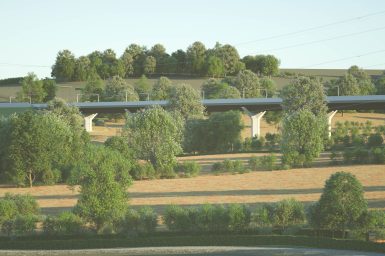
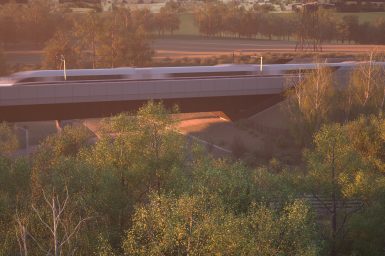
Wendover Dean viaduct
The viaduct is 450 metres long, located south of Wendover in Buckinghamshire, and will be more than 14 metres high.
Small Dean viaduct
The viaduct is 345 metres long and sits just south of Wendover. It will carry the HS2 line across the A413, Small Dean Lane and a rail line.
Westbury viaduct
Set low in the landscape to the east of Brackley, Westbury Viaduct crosses the floodplain of the River Great Ouse.
Learning from international high-speed rail
Double composite steel–concrete bridge decks are widely used on European high-speed railways, particularly in France, where engineers have refined efficient long-span bridge solutions over several decades.
By adapting these proven methods for UK conditions, we’re drawing on established international practice while building new skills across the UK supply chain.
Cutting carbon through smarter design
Design optimisation across these viaducts has reduced embodied carbon by between 52% and 66% compared with more traditional bridge solutions.
Combining steel and concrete more efficiently reduces the overall quantity of high-carbon materials while maintaining structural performance. Longer spans also mean fewer piers, helping minimise environmental impact across floodplains and transport corridors. Lessons from early designs have been applied across multiple structures to improve efficiency further.
Watch our YouTube channel
How and why we're building HS2


HS2 works near you
Sign up for updates about construction in your area. We’ll tell you what we’re building, when we’re working and what we’re doing to reduce disruption.