HS2 Project Update
Britain’s new high-speed railway
HS2 is Britain’s new high-speed railway. It’s the most significant addition to the rail network in over a century and lays the foundations for the future of our railways. It will provide more reliable and faster journeys while relieving pressure on the congested southern end of the West Coast Main Line.
In our latest video, Mark Wild, our CEO, shares an update on construction progress across our 140-mile route. He also sets out how the reset is reshaping how we deliver the programme.
HS2 Project Update video series
Our project updates share progress on how we're building Britain's new high-speed railway.
We are resetting the programme
Mark Wild, our CEO, is leading a complete programme review to reset the project. We’re putting it on a more stable path. We’re giving the government and taxpayers greater certainty around cost and when we’ll finish building.
Why it matters?
This certainty provides the opportunity to look at how we maximise economic growth through delivery and rail capacity that is part of the government’s long-term plan to rebuild Britain’s infrastructure.
What was the problem?
Our assessment showed civil engineering was out of sequence and behind schedule. We could not open the railway between Old Oak Common station and Curzon Street station in the target window of 2029 to 2033.
What was the challenge?
We’re building across 350 sites between London and Birmingham. Construction has not kept pace with our plans. Some areas are further ahead than others, but not necessarily those that need completing first. This creates inefficiencies and adds costs.
We’ve learned from Crossrail (which delivered the Elizabeth line) that civil engineering and railway systems must not be built in the same space at the same time. This slows progress and adds risk.
How are we solving this?
We’re resetting the schedule by working backwards from the opening date. We’re sequencing all works in the right order at the right time to drive productivity. This gives suppliers clarity about when and where they’re needed.
The government’s four-year funding settlement helps us plan for the long term and focus resources where they’re most needed.
What difficult decisions have we made?
We must slow or pause some work while other sites catch up. This includes most work on the main line north towards Handsacre and secondary work supporting London’s tunnel network.
This creates financial headroom to speed up construction in areas that have fallen behind. This is particularly the central section across Buckinghamshire, Oxfordshire and Northamptonshire.
Extreme weather has affected this area. The winter of 2023 to 2024 was the UK’s wettest on record. But the dry spring and summer of 2025 have significantly boosted productivity.
How are we monitoring progress?
We’ve overhauled how we manage and monitor construction progress. Real-time information tracks progress. A traffic light system quickly shows when interventions are needed.
This collaborative approach with our partners gives us renewed confidence in our new cost and schedule ranges, which we’re preparing for government.
We are prioritising a test area
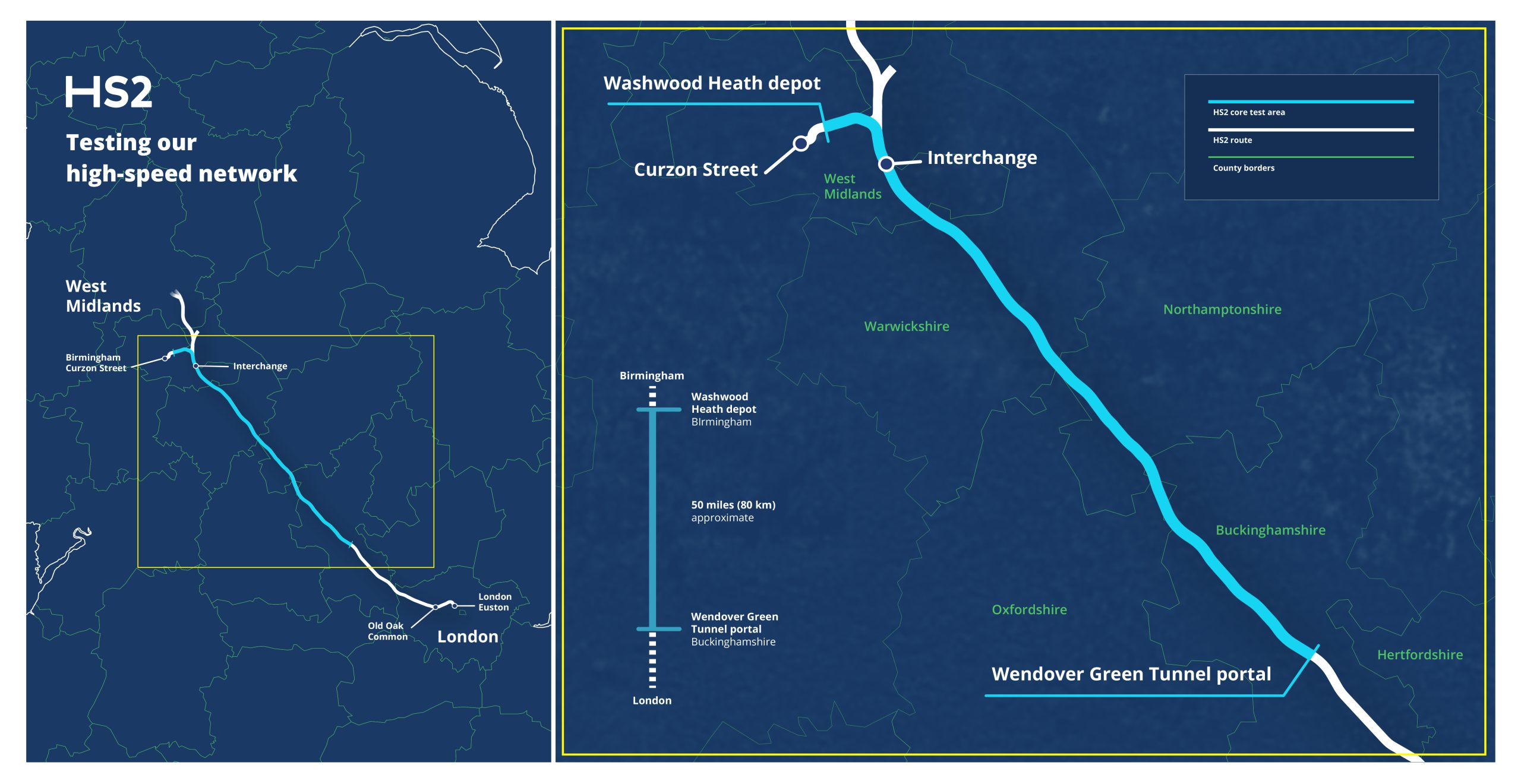
We’re prioritising a 50-mile section of the railway to install track, power, signalling and communications systems first. This will let us test the railway while construction continues elsewhere.
It’s rare for a new railway and new trains to start at the same time. We need to comprehensively test them together before safely opening the railway.
The test area is a section where we’ll complete all the infrastructure first, so we can:
- test the systems without trains (static testing)
- test everything together with trains running (dynamic testing)
This approach means testing can start while we finish the rest of the route.
Which section of the route will form the test area?
The core test area will run for about 50 miles from:
- Washwood Heath in Birmingham, where we’ll build the Network Integrated Control Centre, to
- The north portal of Wendover Green Tunnel in Buckinghamshire
We chose this section because:
- it’s long enough for us to test our trains at full speed
- it gives enough distance to test and calibrate the braking systems
- it provides sufficient infrastructure for effective testing
Completing the civil engineering on this 50-mile section is now our top priority. This gives rail systems engineers a clean handover.
We’ve deferred some works outside this area, including engineering at Handsacre in Staffordshire (where HS2 joins the West Coast Main Line) and secondary works on the London tunnels network.
This protects the test area and keeps us on track.
Why we’re taking this approach?
Mark Wild’s review in spring 2025 showed we hadn’t allowed enough time for testing. We’ve learned from other major projects, including Crossrail, where Mark successfully delivered the Elizabeth Line.
Testing in phases keeps us on schedule. Waiting to finish all the civils work from Curzon Street to Old Oak Common before testing would delay opening.
How we're building Britain's new high-speed railway
Understanding the challenge
Mark Wild’s initial assessment in his first three months identified what had been completed, what remained to be done, and crucially, why costs and timescales had escalated. This foundation enabled the reset to begin.
The reset approach
A specialist taskforce, based on the successful Crossrail recovery model that delivered the Elizabeth line, is creating new cost and schedule estimates. These will undergo thorough verification before adoption.
Simultaneously, HS2 is building the right organisational structure with critical appointments:
- Morag Stuart (Chief Commercial Officer) – Establishing new contractor relationships to improve efficiency and taxpayer value
- Six new non-executive directors – Strengthening board leadership and oversight
Safety remains paramount
With around 3o,000 people working across the 140 mile route, safety leadership has been strengthened with better visibility of on-the-ground progress and challenges. The commitment is clear: everyone must go home safely.
Building trust through transparency
As an arms-length body, HS2’s relationship with government centres on mutual trust, transparency and shared goals. The reset embeds lessons from:
- The James Stewart Review
- Industry expert findings
- Wider government reviews
All will be implemented by the end of the reset period.
Why this reset will succeed
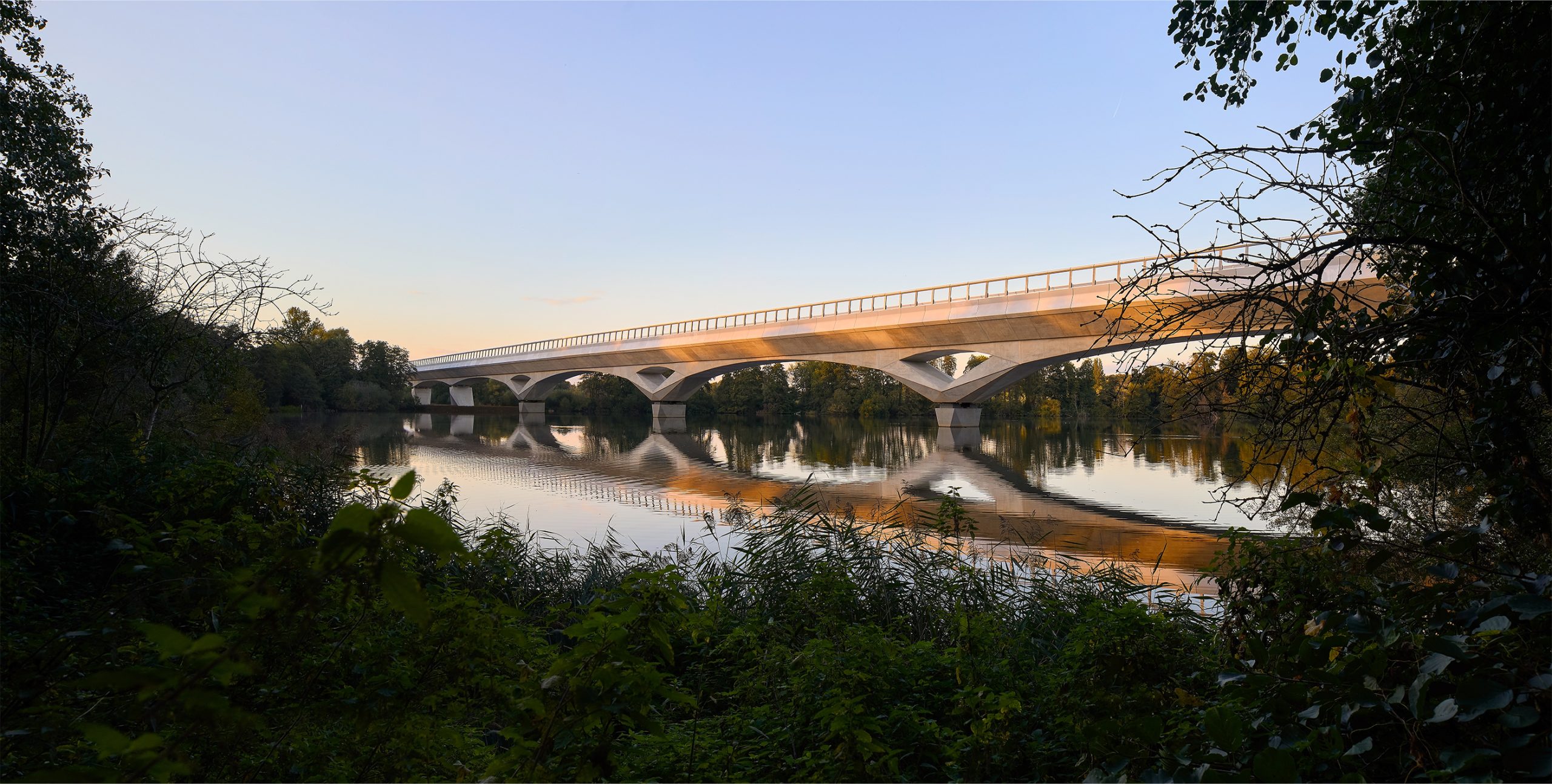
Five years of construction knowledge provides solid foundations for accurate estimates. Major complex structures – including the longest tunnel and bridge – are complete. Focus now shifts to sequencing remaining civils work before rail systems installation.
Improved productivity delivered results in 2025, with all six construction milestones met on time. All twin-bore tunnelling on the 46-mile opening section (Old Oak Common to Birmingham Curzon Street) is now complete.
Proven methodology applies the refined Crossrail recovery model – the same approach that transformed Europe’s most troubled infrastructure project into an operational railway.
Transparent collaboration with the Department for Transport throughout ensures accountability.
Construction progress
We’re continuing construction across 140 miles of route. Around 30,000 people now work on the programme. To date, 2,032 apprentices have joined the project, which surpassed the target of 2,000 apprenticeship starts, with two-thirds aged 16-24 and a third over 25. Furthermore 5,645 previously unemployed people have secured work on HS2.
Tunnelling
4 out of 5 twin-bore tunnel excavation is complete
85%
Viaducts
Bridges
Earthworks
105 million cubic metres of earth moved to date
70%
HS2 funding
The Department for Transport’s (DfT) report to Parliament provides an overview of the funding and schedule for the project.
Read the latest HS2 6-monthly report to Parliament on GOV.UK.
Email newsletters
Subscribe to our Project Update newsletter to receive the latest news and updates about HS2.