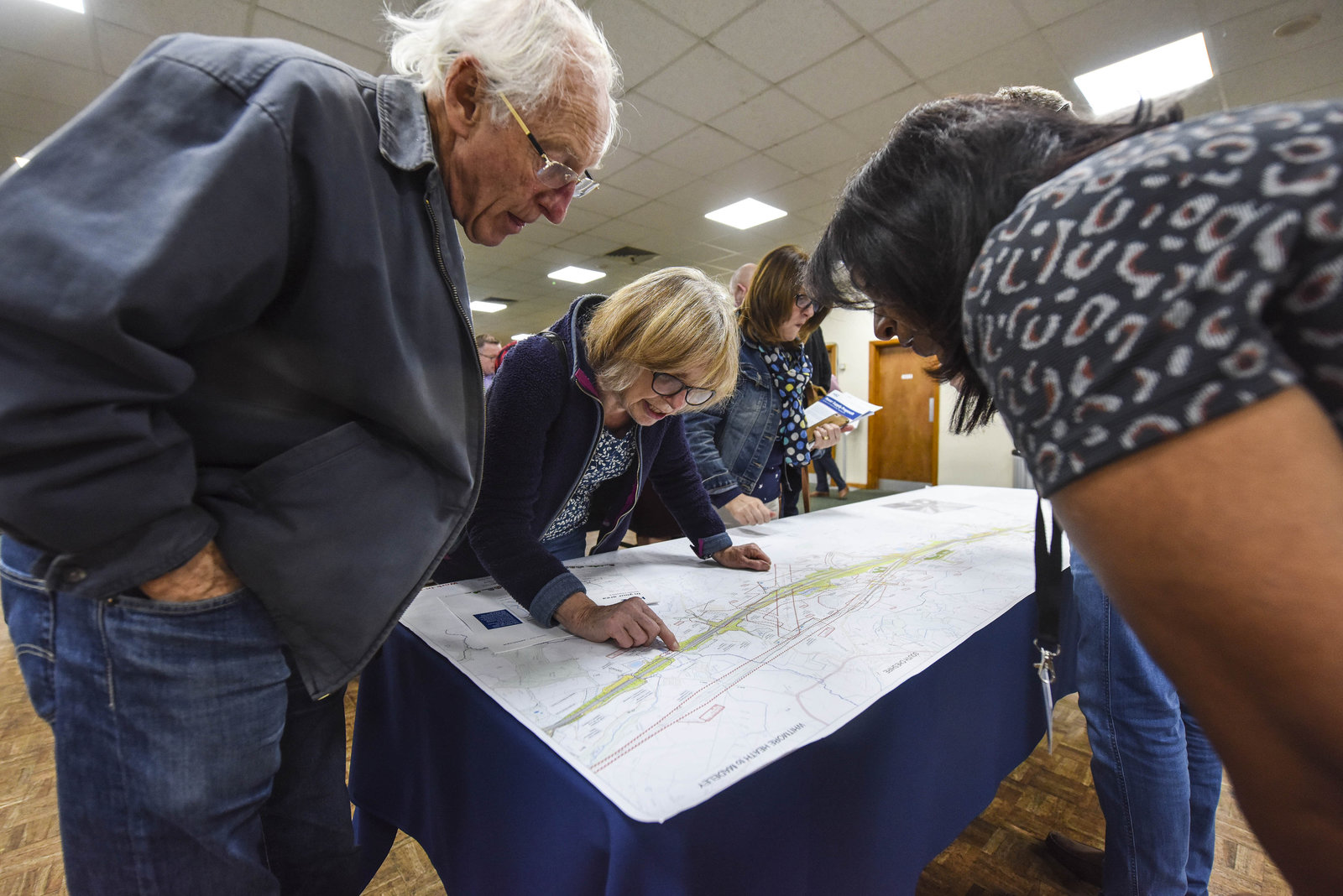
Is your property affected by HS2?

Check if you're affected
The impact on your home depends on where you live. You can check whether you’re affected using our Interactive route map, reading our Property Schemes Guidance, or by contacting the HS2 helpdesk.
Protecting land for HS2
Safeguarding
We protect land we may need to build the railway. This includes land for tracks, tunnels, utilities such as gas, electricity and water, planting and flood protection.
This process is called safeguarding. It makes sure no one builds on land needed for the railway without being consulted first.
Our design continues to develop, so the amount of land we need can change. We update our safeguarding maps when this happens.
Safeguarding does not stop you making a planning application. But when your council receives one, they tell us on behalf of the government. We then advise whether the application would affect the railway.
If your land or property is in a safeguarded area, you may be able to sell it to us and receive extra compensation. This is called statutory blight.
Safeguarding directions
The latest Safeguarding Directions, issued by the Secretary of State for Transport:
- West Midlands to Crewe: January 2024
- Crewe to Manchester: June 2022
Note: The HS2 Safeguarding Direction that had been in place to provide for a rail depot at Annandale, in Dumfries and Galloway, was removed by the Scottish Government in May 2026.
- West Midlands to Leeds: July 2025
Note: Safeguarding Directions remain in place in Leeds City Centre to support enhancements, such as for onwards travel, around Leeds station.
Statutory blight
If your property is in a safeguarded area, you may be able to ask the Secretary of State for Transport to buy it before we need to start building there. To do this, you need to complete a blight notice.
If you receive a notice from us
If you live close to the route, you may receive a notice from us. This means we may need to:
- access your land or property to carry out surveys
- temporarily occupy your land or property
- permanently acquire your land or property
Property schemes
If your land or property is affected by the construction or operation of HS2, we can help.
Ground settlement
When we dig for tunnels, portals and shafts, the ground can shift slightly. We call this settlement.
Read more about ground settlement and how to register for settlement deeds.
Using subsoil for HS2
- how and why we obtain and use subsoil that is beneath land and properties;
- the legal permission we need and your rights to compensation;
- how we will build the tunnels; and how we will keep you informed.
Construction noise and vibration
We know that building a new railway can affect people who live and work near the route. We take this seriously. We design and build HS2 in ways that reduce noise and vibration as much as possible.
Read more about schemes to help those affected by noise and vibration.
Land access
Our land and property team arranges access to private land so we can complete surveys along the HS2 route.
Before Royal Assent, we carry out surveys under a licence. After Royal Assent, we use powers in the High Speed Rail Act.
These surveys help us build a detailed picture of the natural environment along the route. The data helps us reduce HS2’s environmental impact.
Read more about our approach to accessing land and property.
How and why we're building HS2


HS2 works near you
Sign up for updates about construction in your area. We’ll tell you what we’re building, when we’re working and what we’re doing to reduce disruption.