How we’re building the railway
The programme reset
HS2 is Britain’s new high-speed railway. It’s the most significant addition to the rail network in over a century and lays the foundations for the future of our railways. It will provide more reliable and faster journeys while relieving pressure on the congested southern end of the West Coast Main Line.
In May 2026, the Government announced that HS2 will take longer to deliver and cost more than previously set out.
In our latest project update video, Mark Wild, our CEO, explains how the programme is moving forward with a realistic and credible delivery plan backed by stronger controls, clearer accountability and improved governance. He also highlights progress made across the route over the last six months and the work now underway to complete the reset in spring 2027.
The reset in action
Construction continues across the route while the programme reset is completed. Around 30,000 people are working on HS2 each day between London and the West Midlands, with safety and productivity at the heart of delivery.
Important progress over the last six months includes:
- Booth Industries beginning manufacture of the first of 300 safety-critical cross-passage doors for the tunnel network.
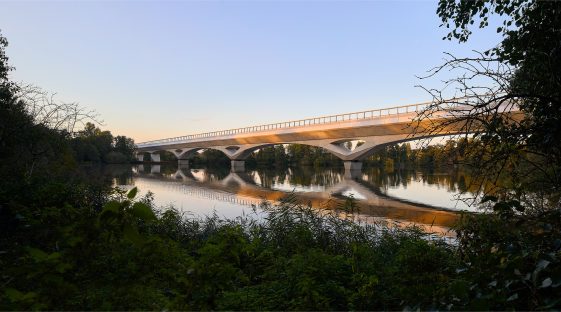
- Installation of major viaduct structures across the M42 and M6 using techniques designed to minimise disruption to road users.
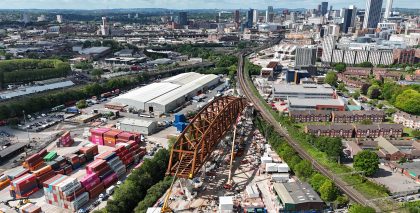
- Curzon 2, the tallest bridge on the HS2 network at more than 40 metres, being moved into place over the existing railway approaching Birmingham Curzon Street.
- Award of the Washwood Heath rolling stock depot and Network Integrated Control Centre contract to a consortium of Taylor Woodrow Infrastructure Ltd and Aureos Rail Ltd.
- Completion of Copthall Tunnel, the first of five green tunnels on HS2, built using 1.2 million cubic metres of material excavated from the Northolt Tunnel.
- Agreed new civil engineering contract deals with its major construction partners – EFKB and Align – to strengthen commercial arrangements, improve cost and delivery controls, and provide greater certainty as work continues across the London–West Midlands route.
HS2 Project Update video series
Our project updates share progress on how we're building Britain's new high-speed railway.
Cost and schedule
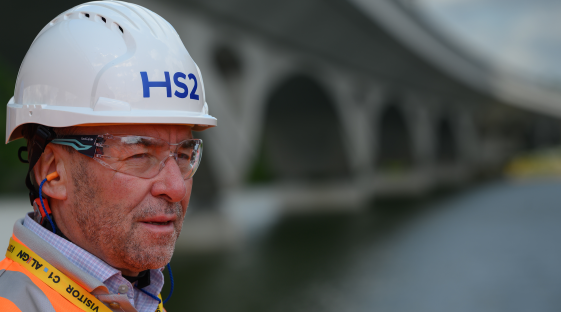
HS2 Ltd CEO Mark Wild and Chair Mike Brown have led a major project over the last year to closely scrutinise every aspect of the HS2 programme while boosting safety, improving productivity and tightening our financial controls.
In early May 2026, updated costs and timescales were published by the Department for Transport (DfT). They had been tested and assured by a panel of industry experts who have experience delivering railways internationally – including Crossrail.
HS2 Ltd and Government will now focus on finalising a detailed plan to complete the remaining works as efficiently as possible and for the lowest reasonable cost. This includes concluding contractual renegotiations with our suppliers and completing the transformation of HS2 Ltd into a more focused delivery company.
Further information
How much will HS2 cost?
The expected cost of delivering HS2 is now in the range of £87.7 – 102.7 billion. This is expressed in mixed price base – spending to date and current prices for future work.
In 2019 prices, the cost is £70.9 – 82.2 billion – compared with the previous cost range of £35 – 45 billion.
These ranges cover the cost of the whole programme – stretching from London Euston to Birmingham Curzon Street and to the connection to the West Coast Main Line at Handsacre Junction.
When will HS2 open?
The first services are expected to run from Old Oak Common in west London to Birmingham Curzon Street between May 2036 and October 2039.
It can now be estimated that the full scheme, including both south to Euston and Handsacre Junction to the north, will open between May 2040 and December 2043.
How do we know these figures are accurate?
Lessons have been learned from the last five years of construction as well as taking on board recommendations from the James Stewart Review, the National Audit Office and the government’s National Infrastructure and Service Transformation Authority (Nista). This means that HS2’s cost and schedules are now built on a far more rigorous foundation.
The reset has been led by HS2 Ltd CEO Mark Wild who used the same experts and methods to deliver Crossrail – making such a success of the Elizabeth Line. They have been through the project with a fine-tooth comb, pricing future work against costs to date. Unlike previous estimates, the cost and schedule ranges are built based on five years of real-world delivery data – the cost and time needed to build bridges, tunnels and embankments. – rather than forecasts.
This work has been rigorously checked by an independent panel of experts who have a strong record of delivering railways.
Why is the cost given as a range rather than a single figure?
A major government review led by James Stewart recommended presenting costs in a range to reflect the inherent uncertainty in delivering a major project like HS2, such as changes in inflation. We expect the range to narrow over time as more work is delivered and risks are mitigated.
Why have costs gone up?
Mark Wild carried out an initial assessment of HS2 last year that identified three reasons for rising costs and delays:
- Construction started too soon in 2020 without completed designs which created significant inefficiencies;
- The contracts awarded for construction of HS2 have failed to drive performance;
- HS2 Ltd was not set up to effectively manage delivery of the project.
His assessment showed that the huge civil engineering project between London and Birmingham had failed out of sequence, with areas further ahead than others, creating inefficiencies and extra costs.
In all, two-thirds of the cost increases announced in May have been attributed to issues with delivery and programme management. A third of the cost increase is linked to inflation, which has significantly impacted the UK economy since 2020 when the previous budget for HS2 was set.
How far have we got with building HS2?
Overall, we are around a third of the way through the delivery of HS2, which includes all structures, stations and the fit out of the systems required to drive the railway. HS2’s civil engineering – the tunnels, bridges, embankments and cuttings that carry the railway between London and Birmingham – is about two-thirds complete.
However, great progress has been made in the last 12 months. As we recently outlined, 2025 was a productive year and many notable milestones for the programme were achieved. This includes the completion of the Colne Valley Viaduct, Britain’s longest railway bridge, and the excavation of all 23 miles of deep-bore tunnels on the opening section of the railway between Old Oak Common and Birmingham Curzon Street. Excavation of HS2’s final major tunnel, from Old Oak Common to Euston, commenced in January 2026.
Additionally, figures show 70 percent of the project’s vast earthworks programme has now been delivered and almost 300,000 tonnes of steel has been used during construction – 69 per cent of that required for the railway.
The Government confirmed £25.3 billion in funding as part of the 2025 spending review. This provides the certainty needed to complete the major civil engineering works on the opening section of the railway by the end of the decade before moving into installation of the railway systems such as track, power, signalling and communications.
Why will HS2 trains run more slowly than originally planned?
We are proposing a package of changes to simplify the railway – increasing the likelihood of opening the railway as early as possible and at the lowest reasonable cost. These changes include marginally reducing the maximum operating speed from 360kph to 320kph.
This would bring HS2 into line with the maximum operating speed of trains elsewhere in Europe and allow the trains to be tested on existing lines while HS2’s infrastructure is completed. It also avoids many of the risks associated with certifying a railway at a speed not operated anywhere in the world.
Journey times are barely altered at 320kph compared with 360kph, adding only three minutes (45 versus 42 minutes) on the journey between Old Oak Common and Birmingham Curzon Street.
What happens if we need to keep your land for longer than we first said?
Where HS2 has had to acquire land temporarily and continues to occupy it, we will continue to compensate landowners for losses incurred. This compensation will continue to be paid until the land is retuned to landowners. The need to retain possession of land will be decided on a case-by-case basis.
Can you claim compensation if construction near you is taking longer than expected?
We recognise the impact that construction of HS2 has on communities living along the route and thank them for their patience while the work is ongoing. We understand that the prolonged disruption announced today will be incredibly frustrating for those affected.
Impacts, such as noise and traffic disruption from worksites, is monitored and reviewed regularly. HS2 Ltd have a Prolonged Disruption Compensation Scheme, offer noise insulation and temporary rehousing schemes and grant funding to support residents.
When will construction finish in your area?
We recognise the extended timeframes for construction of the railway will not be welcomed by affected communities but the reset of the HS2 programme was a necessary step to establish a credible schedule to deliver the remaining works, so communities have certainty on when construction will complete.
While some parts of the programme are taking longer than planned, HS2 remains committed to minimising disruption and keeping communities informed on how they will be impacted by delays to the construction programme.
HS2 is committed to providing regular updates through community meetings, newsletters, works notifications and a 24/7 Helpdesk.
In 2025, HS2 secured a generous four-year funding settlement in the Spending Review. This gives us the stability to get the huge civil engineering works finished by the end of the decade – allowing us to then move on to installation of the railway systems such as track, signalling and power.
Why is construction slowing down in some areas?
We’re resetting the construction schedule by working backwards from the opening date. We’re sequencing all works in the right order at the right time to drive productivity. This gives suppliers clarity about when and where they’re needed.
The government’s four-year funding settlement for HS2 – confirmed as part of 2025’s spending review – helps us plan for the long term and focus resources where they’re most needed.
We must slow or pause some work while other sites catch up. This includes most work on the railway between Birmingham and Handsacre in Staffordshire where HS2 connects with the West Coast Main Line – allowing services to run to the north west and Scotland.
This creates financial headroom to speed up construction in areas that have fallen behind. This is particularly the central section across Buckinghamshire, Oxfordshire and Northamptonshire.
See a video, below, on how HS2 is now sequencing construction.
How we're building Britain's new high-speed railway
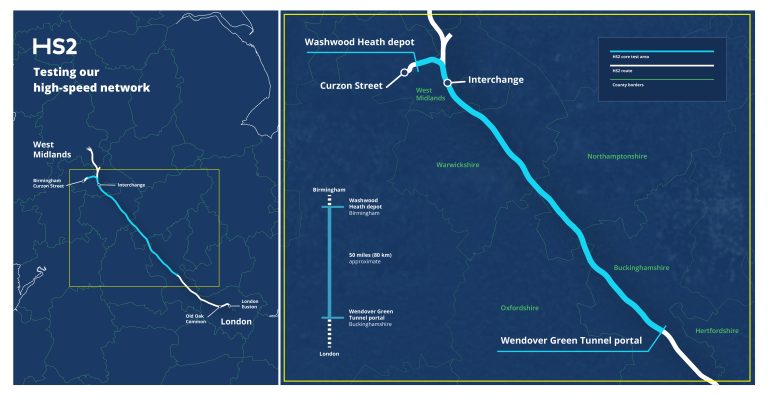
We are prioritising a test area
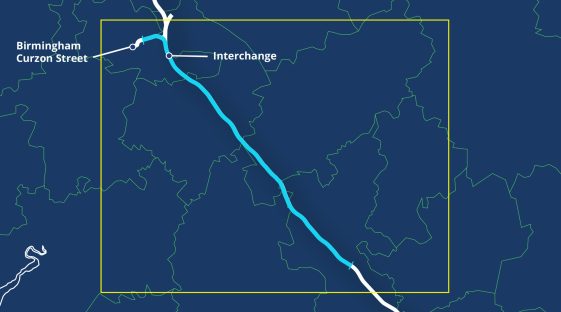
We’re prioritising a 50-mile section of the railway to install track, power, signalling and communications systems first. This will let us test the railway while construction continues elsewhere.
It’s rare for a new railway and new trains to start at the same time. We need to comprehensively test them together before safely opening the railway.
The test area is a section where we’ll complete all the infrastructure first, so we can:
- test the systems without trains (static testing)
- test everything together with trains running (dynamic testing)
This approach means testing can start while we finish the rest of the route.
In addition, operating up to 320 kph – the maximum speed of railways in Europe – allows us to test the performance of the trains on tracks elsewhere while the priority test area is completed.
Which section of the route will form the test area?
The core test area will run for about 50 miles from:
- Washwood Heath in Birmingham, where we’ll build the Network Integrated Control Centre, to
- The north portal of Wendover Green Tunnel in Buckinghamshire
We chose this section because:
- it’s long enough for us to test our trains at full speed
- it gives enough distance to test and calibrate the braking systems
- it provides sufficient infrastructure for effective testing
Completing the civil engineering on this 50-mile section is now our top priority. This gives rail systems engineers a clean handover.
Construction progress
We’re continuing construction across 140 miles of route. Around 30,000 people now work on the programme. To date, 2,032 apprentices have joined the project, which surpassed the target of 2,000 apprenticeship starts, with two-thirds aged 16-24 and a third over 25. Furthermore 5,645 previously unemployed people have secured work on HS2.
Twin-bore tunnels
Tunnelling
Viaducts
Bridges
Cuttings
Embankments
HS2 funding
The Department for Transport’s (DfT) report to Parliament provides an overview of the funding and schedule for the project.
Read the latest HS2 6-monthly report to Parliament on GOV.UK
HS2 works near you
Sign up for updates about construction in your area. We’ll tell you what we’re building, when we’re working and what we’re doing to reduce disruption.