From Bronze Age to medieval Buckinghamshire
Discoveries in Buckinghamshire
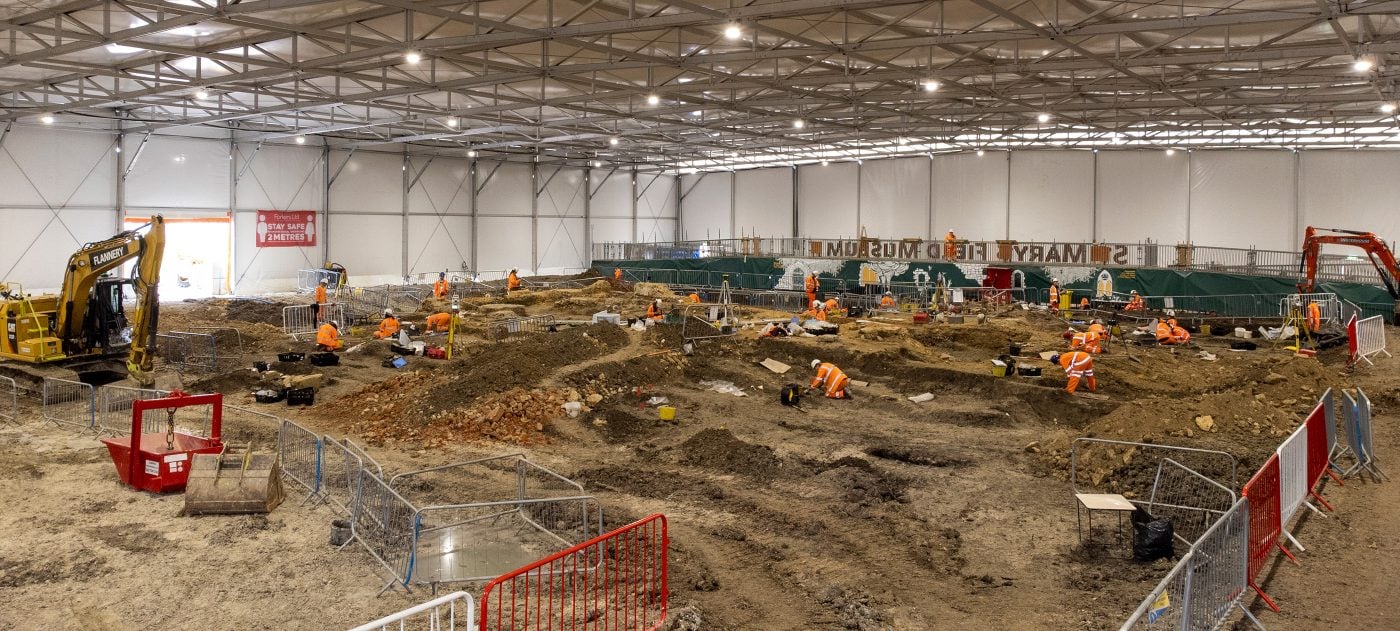
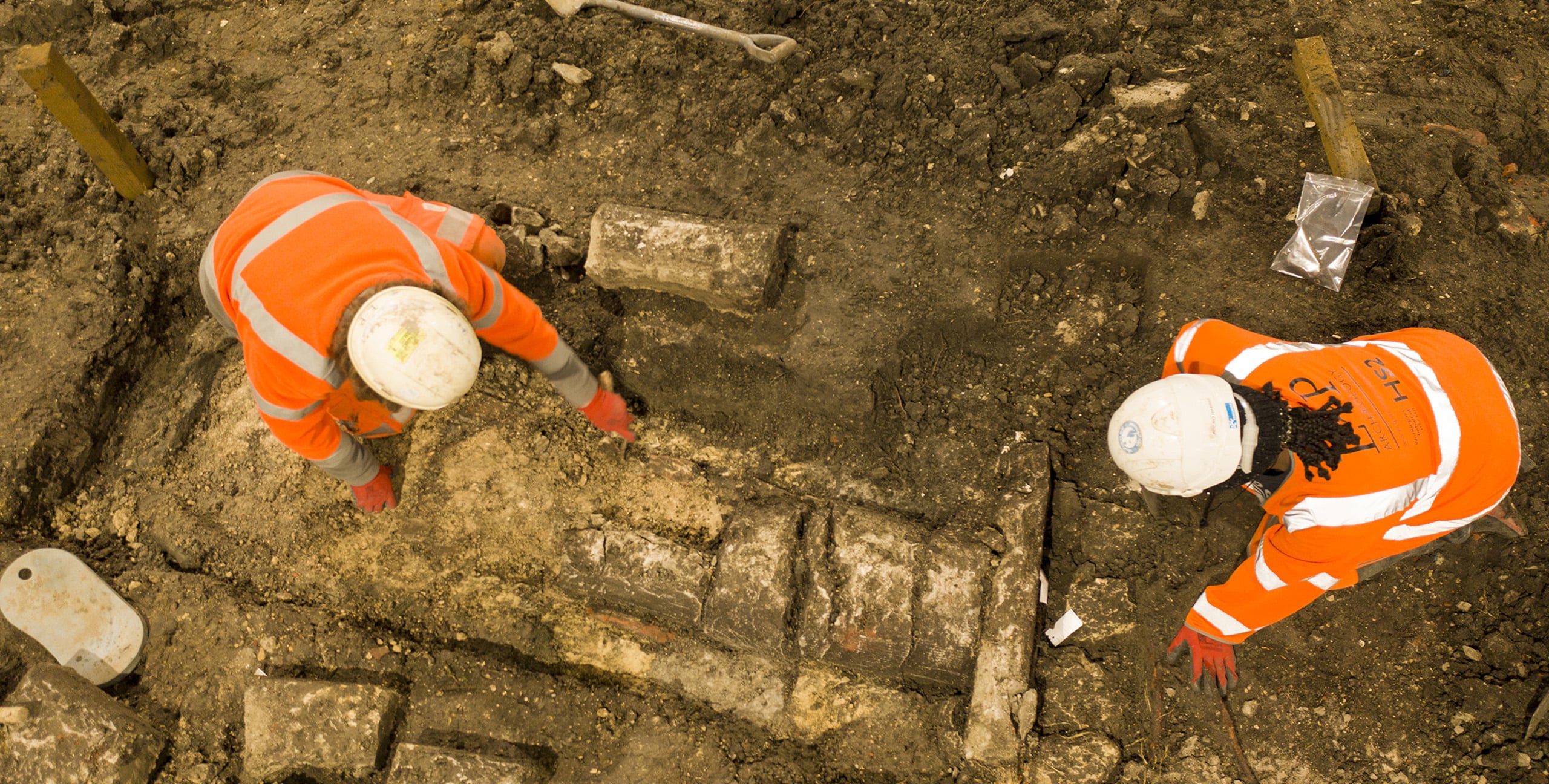
Archaeological excavations in Buckinghamshire have included the investigation of a ruined church at St Mary’s near Stoke Mandeville.
We made the unexpected discovery of what is thought to be a much earlier Roman mausoleum, complete with stone sculpted heads of three individuals.
Other notable discoveries include the remains of a ceremonial monument similar to Stonehenge and a significant Anglo-Saxon burial ground.
St Mary’s church
Archaeologists in Stoke Mandeville found the remains of a Norman church, which was built shortly after the Norman Conquest and may have been the private chapel belonging to the lord of the manor at that time.
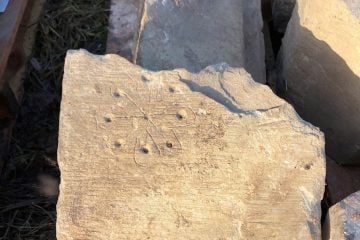
During excavations on the site, we found unusual stone carvings, medieval graffiti and other markings. Two stones have a central drilled hole from which a series of lines radiate in a circle. Historians consider these markings to be ‘witches’ marks, created to ward off evil spirits by entrapping them in an endless line of maze.
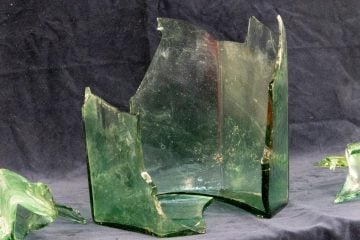
In the final stages of the excavation, we uncovered three Roman stone busts. The statues consist of the heads of a female, male and child. We also discovered an incredibly well-preserved hexagonal glass Roman jug.

Slide 1 of 5: A complete bust of female Roman statue, an artefact found from St Mary’s archaeological dig.

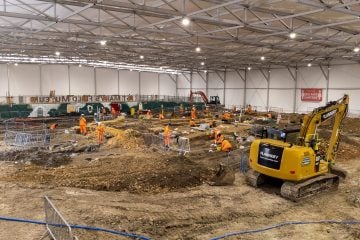
Slide 2 of 5: Archaeologists working on excavating St Mary’s church.

Slide 3 of 5: A rare Roman glass jug, an artefact found from St Mary’s archaeological dig.

Slide 4 of 5: Medieval graffiti and markings found on stones discovered during the St Mary’s archaeological dig.

Slide 5 of 5: St Mary’s church archaeological dig.
Wellwick Farm
At a farm in Wendover, we’ve revealed evidence of human activity dating from the Neolithic to the Medieval period. The land to the west of Wendover seems to have been persistently used for ceremonial activity.
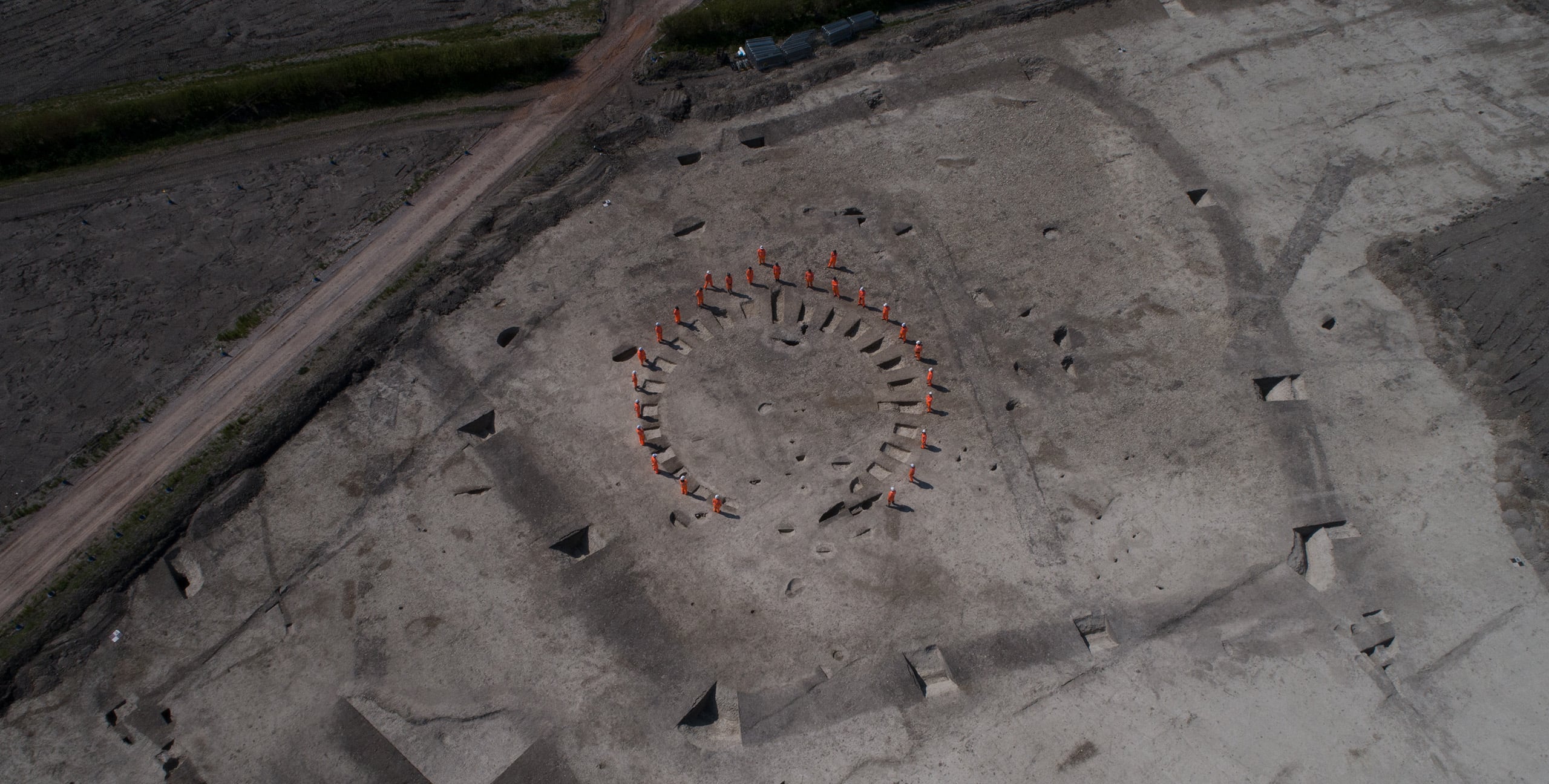
We found a large circular monument of wooden posts 65 metres in diameter with features aligned with the Wilter Solstice, similar to Stonehenge in Wiltshire. Archaeologists also believe the Bronze Age and Iron Age saw the addition of some domestic occupation with at least one roudhouse identified and possible structures such as animal pens.
Wendover burial ground
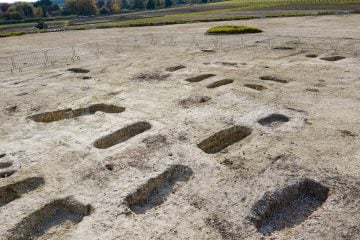
We found an Anglo-Saxon burial site of national significance in Wendover. Almost three quarters of the graves contained high quality grave goods, suggesting the site was the final resting place of a wealthy Anglo-Saxon community. The items uncovered are dated to the 5th and 6th century, a period in which there are gaps in historical records.
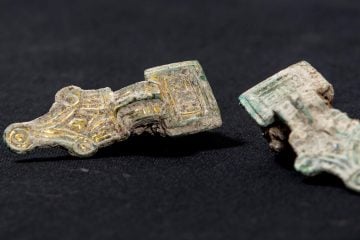
We found burials with brooches on their collarbones, indicating they would have been holding up garments such as a cloak or a peplos (a long garment worn by women with shoulder brooches). The brooches vary in style. Some were disk brooches made with gilt, or coin brooches made of silver. Other items included Anglo-Saxon jewellery, beads, swords, shields, spears and personal hygiene kits.
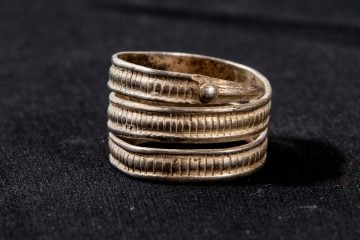
One female was discovered with a vast array of goods. The quality of these suggest she was high-status amongst the buried population at the site. She was buried with a complete ornate glass bowl made of pale green glass, thought to be made around the turn of the 5th century, so could have been an heirloom from the Roman era. Other burial items included multiple rings made of copper alloy, a silver ‘zoomorphic’ ring, brooches, discs, iron belt fittings and objects made of ivory.

Slide 1 of 6: The site of the excavation of an Anglo Saxon burial ground in Wendover.

Slide 2 of 6: One of the items discovered in the Wendover burial ground.

Slide 3 of 6: A silver "zoomorphic" ring discovered in the Anglo Saxon burial ground.

Slide 4 of 6: A set of copper alloy small square headed brooches, decorated with gold gilt, from the 5th or 6th century, uncovered during the archaeological work in Wendover.

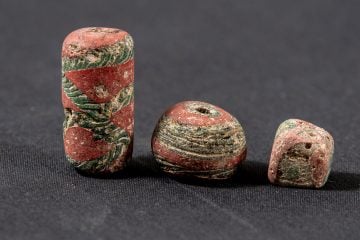
Slide 5 of 6: Anglo Saxon decorative glass beads uncovered during HS2’s archaeological excavation of a burial ground in Wendover.

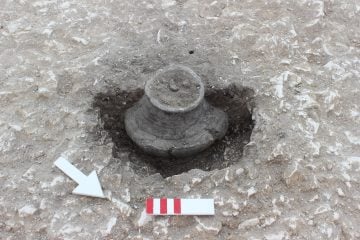
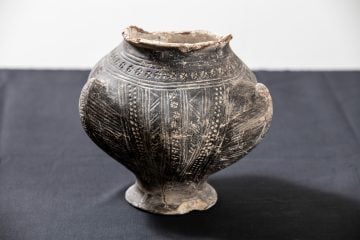
Slide 6 of 6: A 6th century decorative footed pedestral bückelurn with three horns, decorated with cross stamps, found in an Anglo Saxon grave during excavations.
More fascinating finds in Buckinghamshire
Fleet Marston
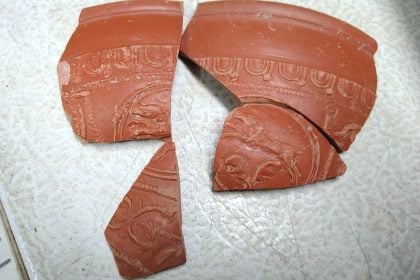
Archaeologists excavated a Roman town sitting alongside a major Roman road in Fleet Marston, near Aylesbury. We uncovered a series of enclosures that contained evidence of domestic structures, as well as commercial and industrial activity.
We also discovered over 1,200 coins and several lead weights, indicating this was an area of trade and commerce. Parts of the widened road may have been used as a market, with extra room for carts and stalls. Other metal objects, such as spoons, pins and brooches, were of a more domestic nature, while gaming dice and bells suggest that gambling and religious activity occupied people’s time here too. Apart from being home to many inhabitants, the settlement is likely to have been an important staging post for travellers and soldiers passing through Fleet Marston on their way to and from the garrison at Alchester.
We also excavated a late Roman cemetery, the largest of its kind now known in Buckinghamshire. The cemetery contained around 425 burials. As was typical in the late Roman period, the cemetery predominantly contained inhumation burials but also included some cremation burials. The number of burials, along with the development of the settlement, suggests there was a population influx into the town in the mid to late Roman period, linked perhaps to increased agricultural production. There are two separate areas of burials, suggesting the cemetery may have been organised by family or ethnic grouping.
Further south on the HS2 site, on a low hill away from Akeman Street, archaeologists found evidence of Early Iron Age large enclosures with wide, deep ditches. The nature of the Iron Age activity is currently uncertain, but the enclosures suggest the area was used for farming before the town was established. Early in the Roman period, the area was the site of open-cast gravel quarrying, possibly used for the construction or maintenance of Akeman Street and its branch roads. We also found a stone-built corn dryer or malting oven, the latter providing potential evidence for brewing.
Three Bridge mill
At Twyford, archaeologists discovered a very rare early Roman humanlike wooden carved figure in a field in Buckinghamshire.
The team initially thought they had found a degraded piece of wood from a water-logged ditch. As they continued to excavate, a humanlike figure was revealed. The figure, cut from a single piece of wood, stands at 67cm and 18cm wide.
Initial assessment dates the wooden figure to the early Roman period, given the style of the carving and the tunic-like clothing. We also discovered shards of pottery dating from 43 to 70 AD in the same ditch. Whilst archaeologists cannot be certain about what the carved figure was used for, there have been examples of wooden carved images being offered as gifts to the gods. It’s possible that rather than being casually discarded in the ditch, it was more deliberately placed there.
Given its predicted age and being carved from wood, what is most surprising is the incredible preservation of the artefact. The lack of oxygen in the water-logged clay fill of the ditch has helped prevent the wood from rotting, preserving it for centuries.

Buckingham watermill
Archaeologists working near Buckingham completed works on a former watermill site with potential origins in the Anglo-Saxon period, which continued to operate until the early 19th century.
A review of historical records by the Buckinghamshire Archaeological Society (BAS), on behalf of HS2, showed that a mill at the site was recorded in the Domesday Book (compiled in 1086) as part of an earlier Anglo-Saxon estate. This estate developed after the year 949 to support the establishment of the burh at Buckingham.
Historical evidence indicates continued activity at the site through the medieval period, with the pattern of water management feature and meadows remaining unchanged in the landscape certainly from 1638 and probably for longer before being pulled down in the 1940s. Features relating to the watermill, bypass channel, mill race and outflow pond were still on site at the start of the archaeological works. The earliest structural evidence recorded on site comprised of three timber beams.
A find of particular interest at the site was a Mesolithic stone mace head. Small chip marks around the circumference of the central perforation suggest it was made using a technique known as pecking, rather than having been drilled. The mace head was recovered from a post-medieval quarry fill, which truncated a curved ditch. It’s possible this ditch was the remnant of a prehistoric ring ditch, with the mace head originating from a truncated internal deposit.
Grim’s Ditch
Archaeologists have investigated an 80-metre section of this large earthwork monument, which extends over 18 kilometres across Buckinghamshire and Hertfordshire and may have been an imposing territorial boundary. Cutting-edge scientific techniques have been applied to help gain a better understanding of when the monument was constructed, which will also help to understand why it was created.
Email newsletters
Subscribe to our Project Update newsletter to receive the latest news and updates about HS2.