Georgian burial grounds to Victorian Birmingham

Discoveries in Birmingham
Before HS2, Birmingham’s 19th century station at Curzon Street was one of the earliest railway stations, as well as the world’s oldest railway roundhouse.
The limited later development of the site meant that surviving remains of the early station represented a unique opportunity to investigate a major early railway terminus in its entirety.
Curzon Street station roundhouse
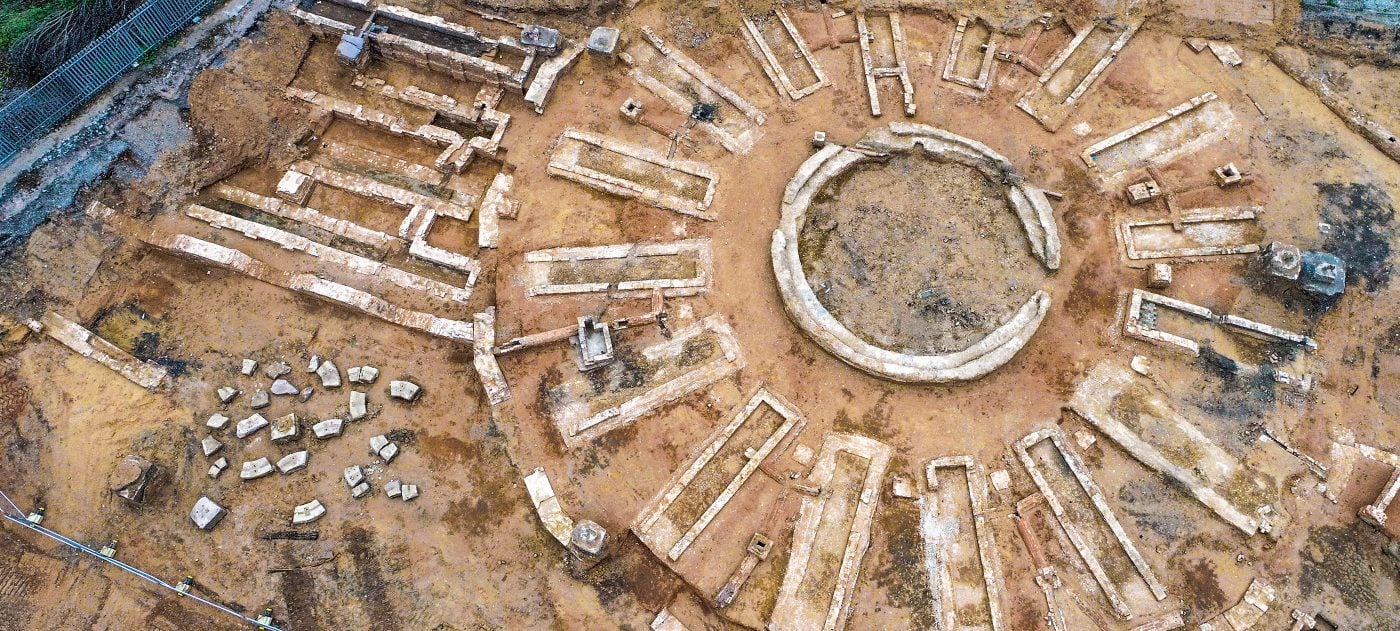
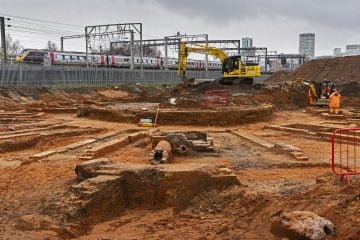
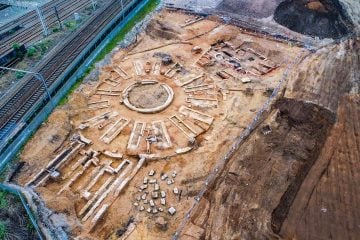
The team working at Birmingham Curzon Street station have unearthed what is thought to be the world’s oldest railway roundhouse.
It was situated adjacent to the old Curzon Street station, which was the first railway terminus serving the centre of Birmingham and built during a period of great significance and growth for the city. The building represents the world’s oldest surviving piece of monumental railway architecture.
Built to a design by the 19th century engineer Robert Stephenson, the roundhouse was operational on 12 November 1837, meaning the recently discovered building is likely to predate the current titleholder of ‘world’s oldest’ in Derby by almost two years. The roundhouse, and specifically the turntable, was used to turn around the engines so locomotives could return back down the line. Engines were also stored and serviced in these facilities. The railway’s 1847 roundhouse at the southern end of the line is now better known as the world-renowned Roundhouse music venue in London’s Camden.
Initially providing passenger services, Curzon Street originally consisted of two station termini, servicing the London and Birmingham Railway (L&BR) and the Grand Junction Railway (GJR). It was converted to a single goods station (following the opening of Birmingham New Street Station in 1854) and operated until the 1960s.
Beginning at Curzon Street Station, Birmingham, and finishing at Euston Station in London, the 180-kilometre (112-mile) long L&BR took 20,000 men nearly five years to build. It’s been estimated that to build the railway, construction workers shifted more material than the ancient Egyptians did when they constructed the pyramids.

Slide 1 of 4: Curzon Street roundhouse discovered at the construction site at Curzon Street station.

Slide 2 of 4: Curzon Street roundhouse discovered at the construction site at Curzon Street station.

Slide 3 of 4: Curzon Street roundhouse discovered at the construction site at Curzon Street station.

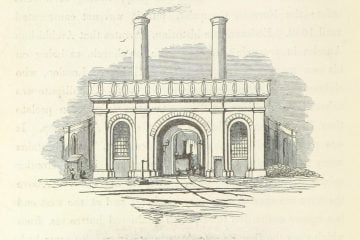
Slide 4 of 4: An illustration that shows the Curzon Street roundhouse as it was in 1839.

Email newsletters
Subscribe to our Project Update newsletter to receive the latest news and updates about HS2.