Medieval manors and historic villages
What we discovered in Warwickshire
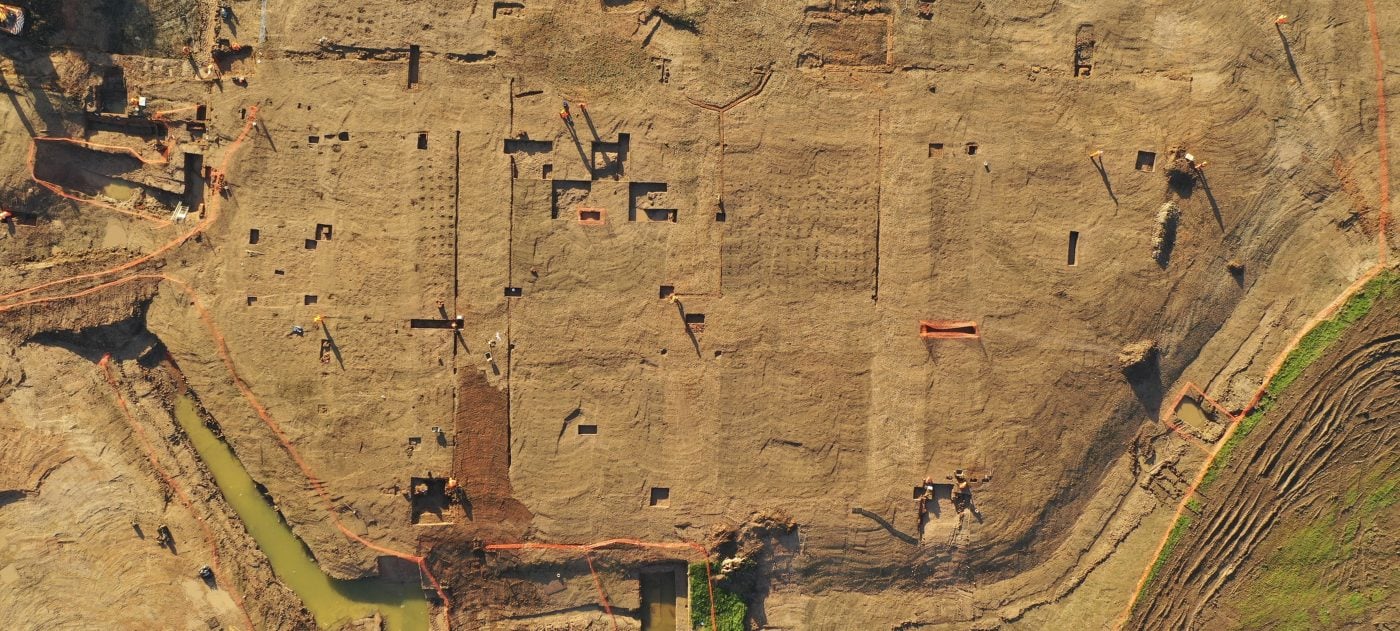
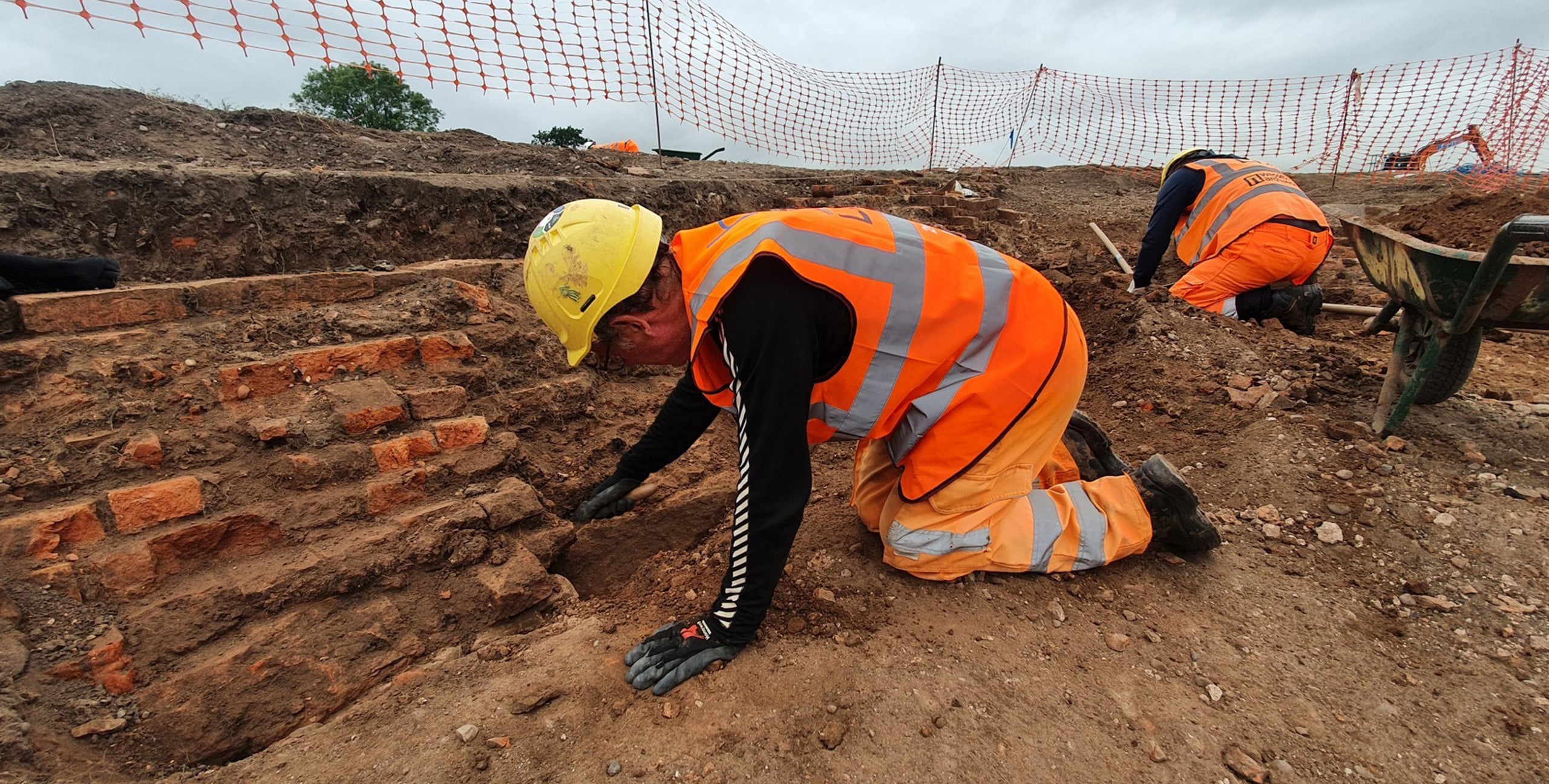
Excavations in Warwickshire have discovered an Iron Age and Romano-British settlement, and have also revealed one of the best-preserved 16th century gardens ever discovered in the UK.
Coleshill Manor
Excavations at Coleshill have uncovered late 16th century gardens.
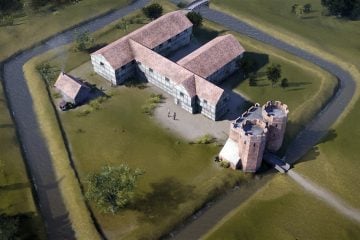
The house was owned by Sir Robert Digby. Experts now believe that after marrying an Irish heiress, he built his home in the modern style, along with huge formal gardens measuring 300 metres from end to end, to show off his new wealth and status.
Entirely unknown before, the preservation of the gardens is exceptional, with well-preserved gravel paths, planting beds, garden pavilion foundations and ornaments organised in a geometric pattern. The site has parallels to the impressive ornamental gardens at Kenilworth Castle and Hampton Court Palace.
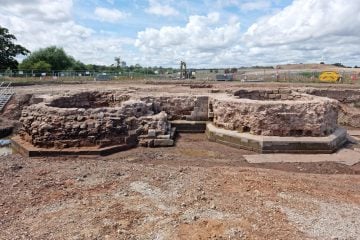
Excavations have revealed structures dating to the late medieval period, with structural evidence attributed to the large gatehouse in the forecourt of the hall. Its style and size allude to a possible 14th or 15th century date.
Archaeologists also uncovered evidence of what could be one of the first battles of the English Civil War in the 17th century. The team were astonished at the striking signs that the heavily fortified gatehouse found on site had come under fire, with around 200 impact marks from pistol shots and musket balls on its outer side. We removed over 40 musket balls from the nearby soil, which would have been a moat around the manor’s gatehouse, further suggesting that a skirmish had taken place.

Slide 1 of 6: Excavation of Coleshill Manor and gatehouse.

Slide 2 of 6: Musket ball impact marks on the outside wall of Coleshill gatehouse.

Slide 3 of 6: The remains of Coleshill gatehouse towers during the exacavation.

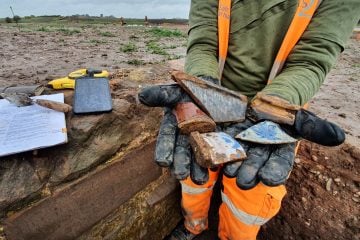
Slide 4 of 6: An archaeologist showing post medieval pottery from the Coleshill Manor site.

Slide 5 of 6: A CGI reconstruction of Coleshill Manor.

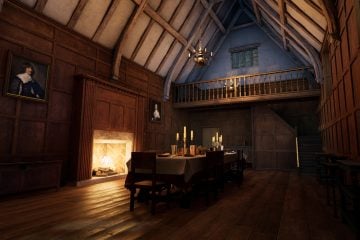
Slide 6 of 6: A 3D reconstruction of the great hall, Coleshill Hall, during the Elizabethan period.
Discoveries in Warwickshire reveal Britain's past
Offchurch
A team of archaeologists working on a site to the north of the village of Offchurch in Warwickshire discovered an Iron Age and Romano-British settlement. We found a small, enclosed settlement of roundhouses, occupied in the Middle Iron Age (400 to 100 BC).
Nestled between the looping curves of the River Leam lies a landscape 2,000 years in the making. From Iron Age trackways to railways and canals, networks of travel and communication have long traversed and transformed the Warwickshire parish of Offchurch.
The village may have been the site of a palace of King Offa of Mercia, one of the seven Saxon kingdoms which occupied the area of the present-day English Midlands. The name of the village means ‘Offa’s church’. The Church of St Gregory is a Grade II* listed building. Although nothing of the Saxon church survives, the nave and chancel date from the 11th to 12th century, and the tower is 15th century.
Email newsletters
Subscribe to our Project Update newsletter to receive the latest news and updates about HS2.