Uncovering 10,000 years of London’s history
What we discovered in London
Archaeologists working in London have found fascinating items in Hillingdon, including a rare set of Iron Age pot tins. In Euston, we discovered thousands of human remains, including those of Captain Matthew Flinders.
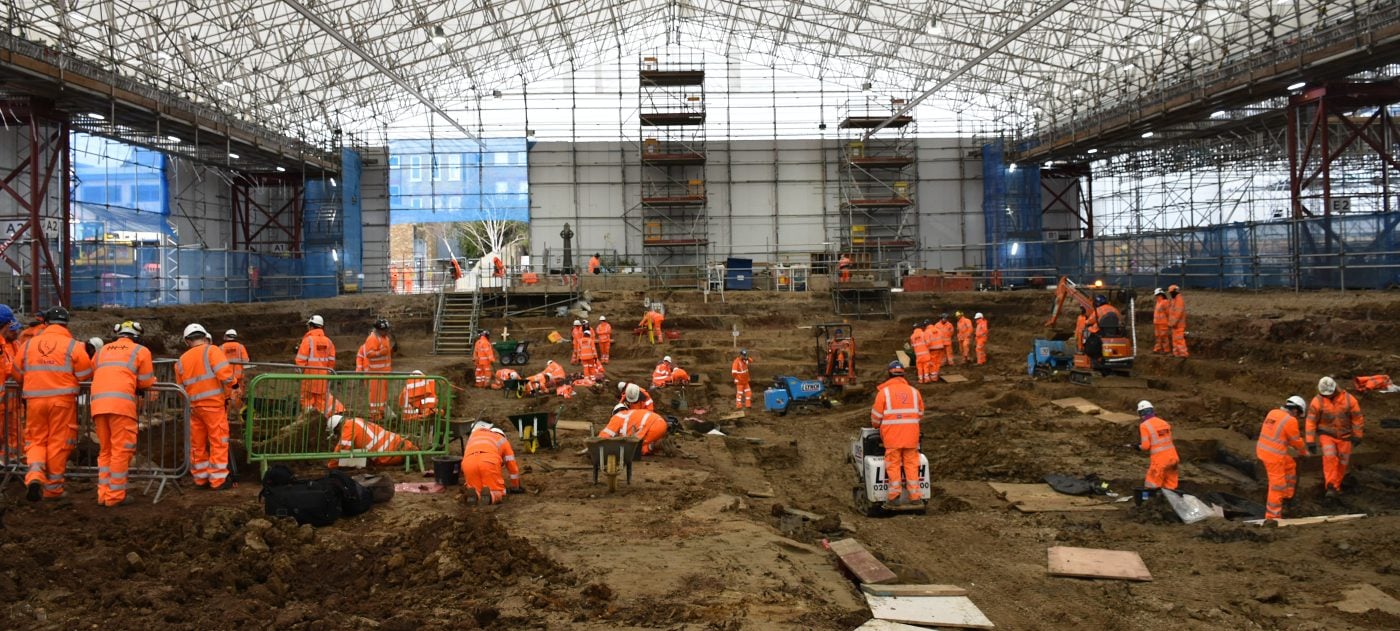
St James’s Gardens burial ground, Euston
Captain Matthew Flinders led the first circumnavigation of Australia and is credited with giving the country its name. His surname is associated with many places in Australia, including Flinders Station in Melbourne.
He died in 1814 and was buried in the St James burial ground. Following the expansion of Euston station into part of the burial ground in the 1840s, his headstone was removed, and it was thought his remains had been lost.
Our archaeologists weren’t confident they were going to find him among 50,000 human remains at St James’s. Luckily, Captain Flinders had a lead depositum (breast plate) which had not corroded.
His final resting place is at the Church of St Mary and the Holy Rood in Dosington, near Spalding, where he was baptised and where many members of his family are buried.
The scientific study of human remains from St James’s burial ground will help us understand life in London during the 18th and 19th centuries. Working with the Archbishops’s Council of the Church of England, we agreed with Brookwood Cemetery in Surrey that the remains would be reinterred. To honour the deceased, we erected a memorial monument within a new landscaped garden.
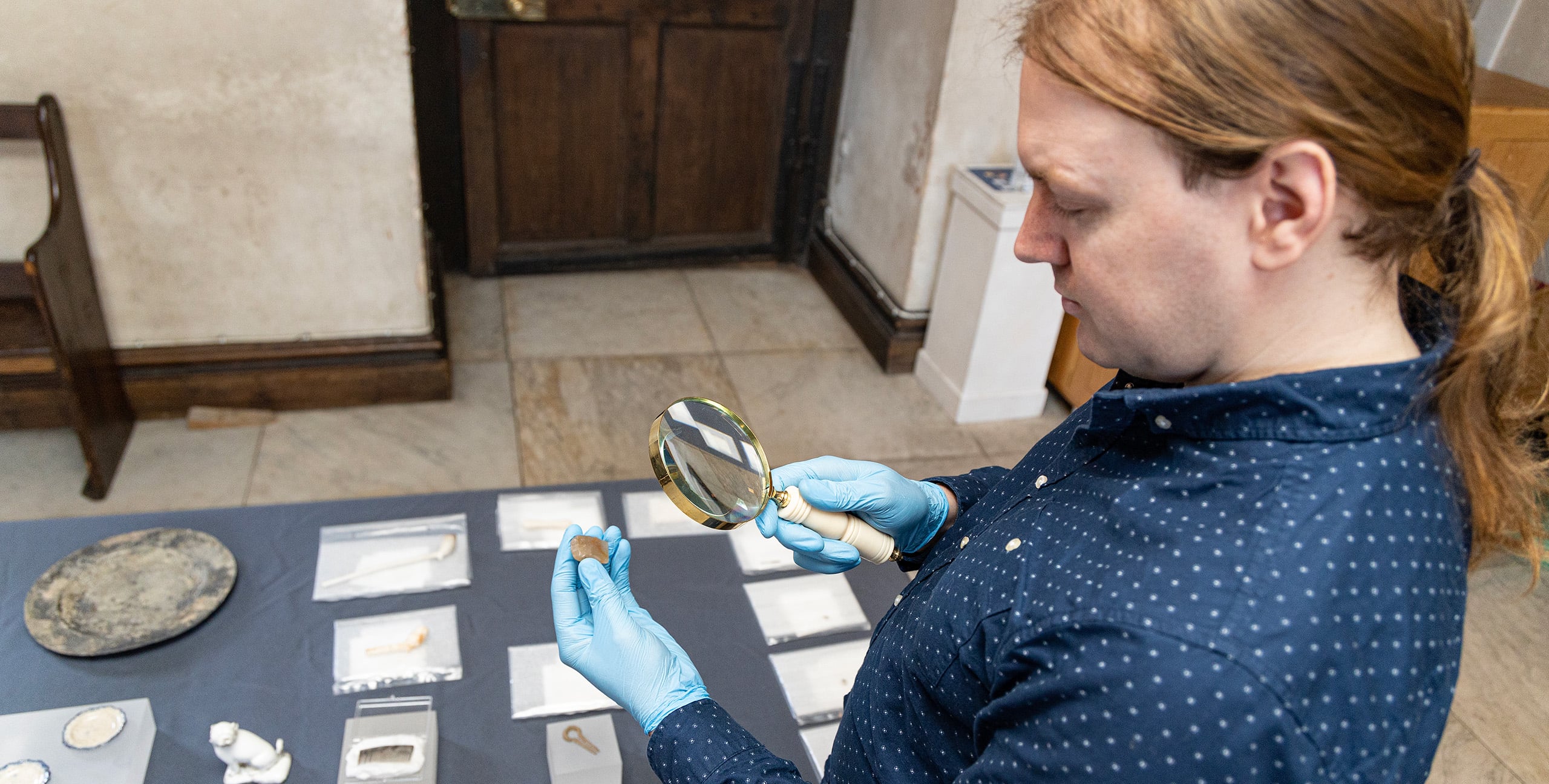
An exhibition revealed the life stories of Londoners during the 1700s and 1800s, offering visitors an opportunity to learn about the lives of five people who were buried there.

Slide 1 of 5: Removing the breast plate of Captain Matthew Flinders.

Slide 2 of 5: Captain Matthew Flinders’s breast plate discovered in situ.

Slide 3 of 5: An archaeologist examines a coffin plate at St James’s.

Slide 4 of 5: The untold stories of a London burial ground exhibition.

Slide 5 of 5: A memorial monument marking the reinterment of Euston remains at Brookwood Cemetery.



Discoveries in London reveal Britain's past
Hillingdon Hoard
Archaeologists in west London uncovered a rare set of 300 Iron Age potins (an early version of the coin) dating back to the 1st century BC. ‘The Hillindon Hoard’ dates back to a period of change as the Romans began to establish themselves in Britain and create Londinium.
The potins are based on coins truck in Marseille, France, about 2,175 years ago, which bear the left-facing head of Apollo on one side and a bull charging right on the other. The use of these early coins spread across northern Europe. In England their use was commonly linked to Kent, Essex or Hertfordshire. The term ‘potin’ refers to the base metal silver-like allow used in coins. It’s typically a mixture of copper, tin and lead.
After analysis, archaeologists believe the potins may have been used to mark the boundary of a property or as an offering to the gods in a woodland clearing or near a sacred spring. It’s not unusual for a hoard to be found in an apparently isolated location. They may also have been buried as savings or as emergency hoards in times of crisis.
On the advice of specialists at the British Museum, the Coroner will conduct an inquest at which recommendations for the find will be made and a potential value placed upon.

West Ruislip golf course
Archaeological works taking place on West Ruislip golf course revealed over 45,000 years of history.
We uncovered evidence of human activity in Hillingdon from the last Ice Age (when the climate was cooling ahead of the last glaciation) to 800-year-old medieval kilns and agriculture, which made use of the natural resources in Ruislip and its surrounding area.
We found all sorts of objects when excavating the site, including items which were lost, such as worked stone tools (which can be hundreds of thousands of years old), jewellery and coins. Other items are simply things that people have thrown away, like 6,00-year-old broken pottery.

Email newsletters
Subscribe to our Project Update newsletter to receive the latest news and updates about HS2.